slavoj zizek; the time of change, interviews you can believe in 1998-9

Slavoj Zizek London 1998 [photo Mykel Nicolaou]

I first met Slavoj Zizek in Bloomsbury in 1998 to conduct a relaxedly spontaneous, short but full-blooded interview in what I was to discover is the authentic Zizekian mode. I knew his work, had seen him speak, admired his reworking of various Idealists more than the brilliant-but-familiar bug-eyed film theorist and, armed only with a dodgy autobiographical preface, wondered about who he was. I’ve just found the 22,000 word transcript  of that first meeting. Afterwards we wandered through Georgian Squares in the University quarter and he graciously accompanied me as far as possible whilst exchanging gossip eagerly, before cutting back to a meeting.

That initial meeting was something of a rehearsal for a plan for me to go to Ljubljana -before easyjet!- to spend a week doing a series of focused interviews. Whilst in that memorably lively city, Zizek would introduce me to key figures from Slovenia’s recent underground; activists, politicos, Laibach, Mladen Dolar and the Lacanian gang, etc. Those sessions produced 14 hours of tape containing dense and agile theorising, but the generous backers of my trip bottled out of publishing the resulting coup [editor had been ‘moved on’, their ‘reliable’ stand-in quoted Bertrand Russell approvingly, as in ‘the only thing I know about Hegel is what Bertrand Russell said…” Weep] -as was always an open possibility. A possibility that had liberated me to do it fully and properly.

Thereafter, there were some telephone conversations and emails  and Zizek sent me his “Kosovo 4.99” piece on the double bind of supporting exceptionally belated foreign intervention to stop Serbian fascism’s campaign of ethnic cleansing; Against the Double Blackmail. A phrase from a clarifying phone call I made to him went in to the first substantial piece published on him in a UK journal [below] around publication of The Ticklish Subject and The Zizek Reader in 1999.

The so-called “Kosovo 4.99” text Zizek sent me was then staged as an exhibition of wall-texts [with a pirate radio installation by Gregory Green] at Cubitt Gallery and as an insert in the pages of Third Text magazine. I came across the original email to me with that ‘lost’ interview transcript. At the time I asked Cubitt to remove the note from SZ with thanks to me from their website because I was embarrassed! Somehow, they took the whole text down instead. After all this time, I’m linking to a pdf of it below with no shame at all.

Continue reading “slavoj zizek; the time of change, interviews you can believe in 1998-9”

A Revolution Every Day: Elias Khoury interview around Bab al Shams/Gate of the Sun, 2005

elias-khoury

Elias Khoury’s Yalo was one of my stones stepped in 2009 [see Categories] and it’s on the long-list for The Independent’s Foreign Fiction Prize, announced here. Competition is stiff, needless to say, but I hope it wins.

71OpE2rW20L._SL1170_I posted a link to the interview-based piece I did around the seminal publication in English of Bab al shams [Gate Of the Sun] in 2005 -the first of its kind in English- and now post it below. Gate of the Sun is a monumental work of fiction; a brilliant creative achievement which is both important and highly accessible. That is, it’s so compelling that there’s no excuse for not realising the necessity of reading it.

In the US Archipelago Books is promising two new Khoury titles; a novel called White Masks in 2010 and another novel As Though She Were Sleeping in 2011. There are already two more works of fiction published in the US by university presses. I’m looking forward to the day when his critical writing becomes available to the English-speaking world.

Wherever you start with Khoury [an earlier novel, Little Mountain Collins Harvill 1990 is out of print] you’ll be hungry for more.

Screenshot 2018-03-12 10.30.56

Elias Khoury: Myth and memory in the Middle East

Lebanese writer Elias Khoury is one of the leading lights of Arab literature. Guy Mannes-Abbott meets him

Friday, 18 November 2005

Elias Khoury is the kind of writer who wins the Nobel Prize for literature to sneers from the English-speaking world. When the Egyptian novelist Naguib Mahfouz was greeted in this way in 1989, the late scholar and activist Edward Said remarked sagely that “Arabic is by far the least known and the most grudgingly regarded” of major world literatures. At the same time, Said pointed to the future, celebrating the promising achievements of Khoury – a “brilliant figure” – and Mahmoud Darwish: a Lebanese and a Palestinian writer respectively.

The word “brilliant” is etched across Khoury’s new novel, Gate of the Sun (Harvill Secker, £17.99) and on my mind when we meet in London for lunch. His reputation as a novelist, critic, commentator, editor and academic with real political commitment is formidable. Khoury came to prominence in Lebanon – and therefore the Arab world – in the mid-1970s. Still in his twenties, he was working in the Palestine Research Centre, editing the literary pages of its journal and writing his second novel, Little Mountain, which re-worked his experiences in the Lebanese civil war of 1975-1990 almost as they happened.

I feel more Beiruti. If you are a Beiruti, you are an Arab. You are open to all types of cultures, and to innovating in the Arabic culture at the same time.

“It’s meaningless!” he thunders, when I ask him what it means to be Lebanese. Then, speaking rapidly, he develops a characteristic response which ends with a modified repetition of the phrase. In between, he sketches a history of Lebanon’s many civil wars since the 19th century, describes similarities in dialect and cuisine between Syria, Lebanon and Palestine, and asserts that “I feel more Beiruti. If you are a Beiruti, you are an Arab. You are open to all types of cultures, and to innovating in the Arabic culture at the same time. You are in the Lebanese dilemmas and you are so near to Palestine”. So you feel “that the Palestinian tragedy is part of your life.”

By this he means sheer physical proximity – “It’s a matter of 100 kilometres” – but also that he has grown up with the Palestinian refugees who arrived in 1948, the year of his birth. All of this is the subject of the epic Gate of the Sun, which has already been cheered in Arabic, Hebrew and French editions during the seven years it took to arrive in this elegant English translation by Humphrey Davies.

Gate of the Sun, or Bab al Shams, is an attempt to render the Palestinian nakba – or “catastrophe” – of 1948 and its tortuous aftermath.

Gate of the Sun, or Bab al Shams, is an attempt to render the Palestinian nakba – or “catastrophe” – of 1948 and its tortuous aftermath. Specifically, it contains the stories and lives of people whose ancestral villages in Galilee, now in northern Israel, were “wiped out of existence”, forcing them into desperate flight by land and sea to Lebanon.

“Actually,” says Khoury, “I was writing a story about Galilee, because it’s in-between” and home to many Palestinian writers, including Darwish. “I was not writing a history of Palestine. Of course, many ask why it was a Lebanese not a Palestinian who wrote this story. I really don’t know. What I know is from the experience of the Palestinians I worked with,” he explains.

“actually this is something unbelievable.”

The nakba of 1948 was “a shame, a total defeat; it’s a disaster, a real personal disaster. There are stories here about the woman who left her child, about a woman who killed her child. So it’s not easy to talk about. The Palestinians did not realise, and if they realised they did not believe that this could happen, because actually this is something unbelievable.”

Khoury had the initial impulse to turn stories he heard in refugee camps into a memorial narrative in the 1970s. He spent much of the 1980s gathering “thousands of stories” before writing this extraordinarily accomplished novel. Gate of the Sun is essentially a love story set in a world turned upside down. It involves a dying fighter called Yunis and his wife Naheeleh, an internal refugee in Galilee, whose relationship forms during stolen visits across the border to a cave renamed Bab al Shams. The cave is “a house, and a village, and a country”, and “the only bit of Palestinian territory that’s been liberated”. It produces a “secret nation”: a family of seven children who have borne four more Yunises by the end of the book.

The cave is “a house, and a village, and a country”, and “the only bit of Palestinian territory that’s been liberated”.

However, this is no parable. For Khoury, “Yunis, of course, is a hero. He used to go to Galilee, he used to cross the borders… but in the end we discover that he was nothing, that Naheeleh was this whole story; her relationship with the children, and how she actually defended life. In the refugee camps I met hundreds of women like Naheeleh. Then it’s no more a metaphor. It’s very realistic.”

This reality is the “revolution of actual work carried out by our mothers”, which the poet Mourid Barghouti articulates so well

This reality is the “revolution of actual work carried out by our mothers”, which the poet Mourid Barghouti articulates so well in his memoir I Saw Ramallah. It is “realised every day, without fuss and without theorising”.

Khoury’s story of love and survival is told by Khaleel, an untrained “doctor” at a redundant hospital in Shatila refugee camp. Shatila was the site of a notorious massacre in 1982, overseen by an Israeli army commanded by Ariel Sharon. During the months that Khaleel attends to Yunis’s lifeless body, he stitches together his honorary father’s stories in order to bring him out of coma. Gradually, Khaleel’s own story emerges: of his love for a female fighter called Shams, and his experience of the camp massacre.

If this evokes the Thousand and One Nights, in which Scheherazade tells stories to keep herself alive, it’s the structure and act of telling that are important. Edward Said praised Khoury’s innovations in Little Mountain and the author takes the compliment, but says that “when I came to write Little Mountain, I discovered that real experimentation is not intellectual”. Instead, you have to “go deep to your own experience”.

These years involved “a very deep engagement about what is justice, what is a human being and what is life”.

In 1967, aged 19, Khoury travelled alone to Amman to join the Palestinian resistance after Israel occupied the West Bank and Gaza. In 1970 he finished his studies in Paris before writing his fictional debut, a nouveau roman. In 1975 he fought for revolutionary change in Lebanon, his disillusionment captured elegantly by Little Mountain. These years involved “a very deep engagement about what is justice, what is a human being and what is life”.

“I don’t think there is any story we live from the beginning to the end,” he says.

It is this experimenting with life, combined with such testing experience of it, that makes his writing less “experimental” in the literary sense than naturalistic. Crucially, he developed a faith in oral narratives; encompassing both the colloquial forms used in telling a story, and the non-classical type of Arabic that such stories are told in. “I don’t think there is any story we live from the beginning to the end,” he says. In this novel, “the structure is oral telling – openness. That is, you begin a story, you enter another story, and then you come back”.

In the novel, Khaleel complains about fugitive “snatches” of story that he’s struggling to remember and narrate. He blames the influence of tarab, the ecstasy generated by the rhythms of Arabic music and – by extension – poetry for the sidelining of descriptive skills. Khoury elaborates: “It’s repetitive, but every time you repeat, you change. Also in prose you create music, repeating the same story three, four, five times, and every time it’s a very slight difference. This is the Thousand and One Nights, this is the musicality of the oral and this is tarab.”

One of the results is that it produces “suspense from a totally different perspective. If you want to know what will happen to Yunis, he will die, so close the book and go home; but it’s another type of suspense.” It is this rhythmic accumulation of story that makes Gate of the Sun so unexpectedly compelling. It’s also this democratic form of telling which has enabled Khoury to approach the subject; to piece together fragments into a masterfully executed novel. The resulting mosaic of suggestive truths complicates any simple metaphorical reading while returning over and over again to discrete realities.

The Israeli project is to make a myth into reality. This is the problem.

“Reality,” he summarises, “can become metaphor or a myth. But a myth, if it will become a reality, it’s the most savage thing in the world. The Israeli project is to make a myth into reality. This is the problem.”

Khoury’s iteration of inconvenient realities is rigorously ethical. It is there in his responsibility towards Jewish history as well as to Palestinian dispossession, and in his novel’s investigation of love’s work. It informs his efforts to modernise Arabic by means of colloquial speech, and his commitment to grassroots democratic movements in Lebanon and Syria.

Khoury’s experience of life has generated a sophisticated optimism. He takes the long view, having resettled in the ancestral home in Beirut from which he was driven in the 1970s. He is both worldly and warm, a man of heart as well as passionate intellect. Nothing is off-limits and he answers every question fully even though we have, literally, eaten into preparation time for an evening reading. Before parting, though, I must ask the author of Gate of the Sun about the theory that “to narrate is to return”.

These paradoxes and “pleasures” find potent resolution in Gate of the Sun. It’s a novel that will outlive us.

“No, I think that to narrate is to reconstruct, to appropriate but,” he breaks into a story from one of his novels before resuming, “one of the biggest, er, pleasures of the Palestinians was to regain your name, to be Palestinians. And once you regain your name – and I think this is narration, to regain the name – then you prepare yourself to go: that is, to create a Palestine, not to return to a Palestine which was.” These paradoxes and “pleasures” find potent resolution in Gate of the Sun. It’s a novel that will outlive us.

Biography: Elias Khoury

Elias Khoury was born in Lebanon in 1948, to an Orthodox Christian family in the East Beirut district known as Little Mountain. As a sociology undergraduate, he volunteered for Fatah, the military wing of the Palestinian revolution. During the 1970s he worked in PLO organisations in Beirut, and helped found the journal al-Karmel with the poet Mahmoud Darwish. He speaks Arabic, French, English, Syriac and “a little Hebrew”. Author of 11 novels, four non-fiction books and three plays, he also scripted a film of Gate of the Sun. The novel is published by Harvill Secker this month. Khoury is now an editor with the Lebanese newspaper An-Nahar and Global Distinguished Professor at New York University. He lives with his wife in his great-grandfather’s house on Little Mountain.

gujarat, on silence and massacres; raj kamal jha fireproof 2007

On Silence and Massacres.

Raj Kamal Jha is one of the most interesting and risk-embracing of his generation of Indian writers of fiction in English. His report on the mass murders and vast internal displacement of Muslims in the state of Gujarat in the spring of 2002 was brave in the context; a nuked up hyper-Nationalist government led by the same party which ruled in Gujarat at the time, the Nazi-inspired BJP.

When he came down from Delhi -albeit two months later- he ‘joined’ those of us not targeted by the officially sanctioned killers but trapped in extended curfews, in my case for days on the 4th floor of a building in central Baroda. Jha wrote a stunned and peculiarly angular piece for The Indian Express, a cutting from which I’ve scanned and posted. His discoveries as a “riot tourist” [‘riot’ is a common euphemism in India for racist massacres or ethnic cleansing, like ‘conflict’ elsewhere] inspired the novel Fireproof, which I reviewed for The Independent below.

Jha reprimanded his readers [urban, majority-community, new-India class] in the mildest of terms; imagine the surreal boot on the other foot. He was addressing those who quietly allowed this to happen, however, and if you won’t credit him with bravery at least understand the relative unusualness of his addressing a class of readers impatient with older Indian verities like those espoused by Nehru -let alone Gandhi! [both of whom happily allied themselves with the chauvinist Vallabhai Patel, India’s ‘Iron Man’ from Gujarat.]

Elsewhere, the hero of the day was Siddharth Varadarajan who expressed his visceral horror in regular reports for the Times of India, while the heroine was Dionne Bunsha reporting for Frontline magazine, [see her site/blog]. Varadarajan also edited the first and still best book on the massacres; Gujarat; The Making of a Tragedy [Penguin India 2002] [look inside] drawing in part on an excellent issue of Seminar [‘Society Under Siege’ from May 2002 is online but not link-to-able] and has a blog here.

What happened in Gujarat is not a matter of substantive dispute [though it’s ostensible trigger, the fire in a train carriage outside Godhra is, even though extensive investigations concluded that the fire which began within the carriage was a tragic accident], there are plentiful witness reports, accounts, proofs, burnt out buildings and neighbourhoods, bodies, refugees and subsequent changes across the state. What happened persuaded urban Gujaratis in particular to reward the government of the day with two further election victories.

So despite what happened no-one has been held to account: Narendra Modi remains Chief Minister of Gujarat. He is the BJP’s only current ‘star’ and commands a state that is India’s real powerhouse once more. A state that is as ever leading the way in new India, for good and ill, and rehearsing what the coming global power will look like. Modi’s mentor, LK Advani, is also a Gujarati MP and the octogenarian leader of a much humbled BJP. However, India’s national elections are three years or so away -if the present Congress administration lasts out its second term- and everybody loves a ‘winner’.

I witnessed some of what happened in Gujarat; I saw armed policemen in uniform holding one end of a street that was being systematically ‘cleansed’ for the second time in 24 hours by a group of 25-30 neatly dressed men, vehicles used to block the various roads and escapes routes and set on fire, as remaining stores, shacks, gadis/trolleys and possession of the neighbourhood Muslims were being dragged out onto the road within sight and smell of the same uniformed accomplices and set on fire.

I witnessed it from inside Bhupen Khakhar’s car as we were trapped by these same men in a near-deserted Manjalpura, Baroda, during a one-day bandh or shut-down. They weren’t after us at that time [though BK’s paintings and sexuality had been the focus of their maddened hatred] and we managed to escape through a series of already laid road blocks and away from the scene before the neighbourhood mosque was burnt down with three men trapped inside it. I was close enough to look hard into their faces as they indulged their fantasies and it’s a sight I’ll never be able to forget.

Then I witnessed the silence, the smoke stacks and discomfort at my front-row presence on the few faces I glimpsed in the coming week locked away [anger, too, once the curfew relaxed]. A silence indistinguishable from the way that such a massacre is possible in India, because what the black milk rising from the eery quiet of Baroda beyond my window proved was that this was long coming and represented something that didn’t need words.

Gujarat’s “mass massacres” only needed silence;  official permission, wider complicity, neatly printed official records of who lived where, who exactly owned what and enabling nods … ram ram

NB Incidentally, I don’t relish criticising India from afar; my view is simply that Modi should face justice in his own country. However, Indian justice is staggeringly slow and precedent  suggests that even if it catches up with Modi before he dies it won’t have any bite. Indeed, it is as likely that he might be the next PM or PM-maker. Things do change however; the case is very much live at this very moment [see here for example].

I support universal jurisdiction; if Modi wants to travel he should be willing to face trial wherever he lands, just like Pinochet and forces’ sweetheart Tsipi Livni and gang. Meanwhile, though, he rule’s India’s most interesting state and is free to roam a subcontinent of bottomless marvels. I remind you that Modi’s BJP forged alliances with the US and Israel when in power: sometimes it’s necessary to tell the truth whatever the distance…

Screenshot 2018-03-12 10.30.56

Fireproof, by Raj Kamal Jha

The perpetrators of Gujarat’s holocaust escape unscathed – as they did in life

By Guy Mannes-Abbott

Wednesday, 11 April 2007

Raj Kamal Jha’s third novel is based on the “mass massacres” that began on 28 February 2002 in the Indian state of Gujarat. Jha visited a smouldering Ahmedabad in May 2002, and wrote a taboo-breaking article for The Indian Express.

He found Gujarat’s old capital with 80,000 Muslim refugees, a thousand dead and many thousands of homes and businesses burnt. This “remarkable restraint” was applauded by Gujarat’s Chief Minister after the “grave provocation” of an unexplained fire on a train carrying Hindu pilgrims, in which 59 people died.

I read Jha’s article gratefully in the disturbing quiet following Gujarat’s pogroms. I had witnessed armed police smiling as clean-shaven men sent their neighbours’ livelihoods – and later their lives – skyward in blackening towers. Five years later, Fireproof disrupts another silence: just 10 convictions have resulted from 4,252 cases filed with police.

Fireproof focuses on three killings, elaborating on the article with statements from dead characters, a playlet, footnotes and talking street-fixtures. Jha’s narrator, Jay, is awaiting the birth of a child in Ahmedabad. The hospitals choke with charred bodies as the city burns; a malformed baby, which Jay believes is his own, forces him to confront events and himself. As the truth looms, the sky rains bodies, and he loses all bearings.

Fireproof is written in Jha’s signature style; elliptical fragments accumulate sense while incidental things and words are mined for effect. This worked well in his debut The Blue Bedspread, rooted in a modernist Bengali literature. But Fireproof’s problem is dramatised in the word “betrayal”, used by a credible Indian critic. The betrayal is twofold. Jha’s novel obtains substance by revisiting the notorious rape and murder of a pregnant woman. He pays witness to this horror in accomplished passages before losing its import in a gratuitously distended novel.

He also betrays himself, as acts of ethnic cleansing by Nazi-inspired Hindus become human tragedies. Jha folds responsibility for events into individual excess and the power of “the mob”: the banality of evil minus the Nuremberg trials. He has lost sight of any original outrage.

The story in Fireproof began in Islamophobia and led to Gujarat’s ovens. Its perpetrators were not “hangers-on”, but “confident and educated”: I saw this myself. In Jha’s novel, these men and their allies emerge fireproof – as in life.

PICADOR, £12.99. ORDER FOR £11.50 (FREE P&P) ON 08700 798 897

susan sontag ‘in america’ 2000; revisited/residue

Susan Sontag‘s brand of earnest enthusiasm is completely redundant, right? The idea that you might live with a body of work [ha!] -especially written work [ha! ha!]- for a long time and then find a way to articulate what it means to you and perhaps us/we too is obviously ridiculous. Isn’t it?

I don’t think these things stand or fall around Sontag and I don’t think that it’s any easier to do the work of exception now; to stand back, up or out enough to be willing and able to celebrate, polemicise, passionately engage, act commitedly, work with words, difficult though they ought to be. No easier, no harder, no more necessary. No less.

Sontag is not the tool or resource I reach for either; she was historicised/historical, boringly everywhere and thus to be avoided as well as out of sync with some of what she was celebrating when I first encountered her ‘great’ essays on the ‘great’. I didn’t start with Sontag, but if you did, my only question was where you went afterwards? -because you did go ‘on’, no?

Then there are all the obvious ways in which she does incarnate American culture’s definitive civilisational moment, which I’m not going to call by any name or term, but which she surfed and was flooded with. Commodity/celebrity. You know, if you endlessly tell everyone every day that you are greatly detained with greatness, difficulty and authority, the wise will only listen awry. If you do it in the literally shiny pages of Vanity Fair, the wise become a little deaf. And yet. Flooded and surfing means that it is not contradictory. It is what it is.

So, I tried to critique Sontag’s In America honestly and for what it’s worth this little review called it right. I don’t mean to be dismissive, though, which is partly why I’m re-archiving it here and now. Nor do I mean to be seen to be right! [agents on the Estate Express don’t make ‘right’ either, nor my critique wrong, obviously.] Sontag’s novel may well be so bad in a way that it exemplifies the badness that is also its subject; American commodity/celebrity, in a perfectly condensed single volume.

Sontag worshipped books as possessions, brains as fetishes, writers and thinkers as gods/goddesses. There are admirable aspirations in there, residue beyond the packaging. All I can now recall about her going to Sarajevo and putting on Waiting for Godot in the late stages of a brutal siege is that she did it. It’s irreducible. While western powers contorted themselves to look the other way for year after year and so-called radicals corrupted themselves to ignore the mass murder of Bosnian Muslims before the world, she was there. She was there, being there, doing being there. I don’t care exactly why, or exactly what measurable impact it made, but I note that she went, stayed, knew what it was like. Just another person, not just another person.

There is something similar about the way her critical writing could work; the breathless intensity of baptismal enthusiasm for a book or a writer felt convincing [or not] while reading, generated an appetite for her object or a sugary rush and desire for more Sontag. It’s true that nothing of hers materially altered or even impacted on [made Sontagian] its object or my lasting understanding of it. Rather it enacted Sontag’s urgent appetite for it [of course], was a convincing herald for the work, took it so seriously that it could butterfly it all over again. The residue is urgency and appetite.

I was caught up by this when reading one of her last pieces; Loving Dostoevsky, in At The Same Time 2007. It recounts her accidental discovery of Leonid Tsypkin’s Summer in Baden-Baden and in essence her passionate admiration for the book [as well as “the incomparable” Dostoevsky, a sentiment I claim as my own]. I don’t want to say anything about Tsypkin, his book, or her critique, only to recall how affective her voice was within the first and last line of her piece. It excited me, I panicked about what else I didn’t know, whether I knew the author or not who now sounded so different, relished the sheer thrill of it all -as she presented it- and felt more alive and clarified in all I thought during those minutes of reading.

It’s easy to sneer about Godot resistance in Sarajevo -even if raised to the challenge of Camp Gaza today- easy to sneer about bursts of enthusiasm and gushing celebration of [dead] writers. Is anything much easier than such a sneer? In fact, it’s notably hard to articulate an agility of intellect or thirst in place of being merely academic and especially difficult to keep the words alive, generative.

The problem is legacy, or residue: if I can appreciate Sontag’s championing of under-recognised figures at one cultural moment, their subsequent ubiquity -or just belated recognition- belittles her effort. It’s forgotten/forgettable and, fatally, it’s polemical need to foreshorten makes it less critically robust after its assimilation too.

Did she know or realise this? Did she hope that the passion might out live the historicising correction? I know it isn’t that she didn’t care! Then again, it’s Calvino’s celebration of Fourier that lingers with me more than all the rest. Zizek’s introductory interpretation in English of Badiou too [yes!]. Then de Quincey’s short text on Kant is a tattoo of truth almost as lasting as Joseph Frank’s staggeringly good five volumes on Dostoevsky. Yet again, look at her perspectival acuity with regard to the Twin Towers and Abu Ghraib…

NB; Speaking of Dostoevsky and Frank, I missed the abridged version of his light-footed monument Dostoevsky: A Writer in His Time, published by Princeton UP in December 2009. The publisher has a good page here, including contents and a pdf of the first chapter. There is an interview with 91 year old Frank here in which he says of Dostoevsky that “He poses questions in such a way that, whether you agree or not, it makes you think about them.”

Which reminds me of David Foster Wallace’s acute, urgently honest and revealing review of Frank’s Dostoevsky [orig. Feodor’s Guide VV 1996] in which the big questions asked by Dostoevsky of his world and of writing clearly formed a big brick in the wall that DFW must have hit at about that time*, finding himself perhaps on the wrong side of the only question/line that matters. Which reminds me, in contrast, of William Gaddis…

*It’s not online now, so I quote: “… we have abandoned the field … who is to blame for the philosophical passionlessness of our own Dostoevskys? The culture, the laughers? But they wouldn’t–could not–laugh if a piece of passionately serious ideological contemporary fiction was also ingenious and radiantly transcendent fiction. But how to do that–how even, for a writer, even a very talented writer, to get up the guts to even try?”


Screenshot 2018-03-12 10.30.56

Famous for 35 years

In America by Susan Sontag (Jonathan Cape, £16.99, 387pp)

Saturday, 27 May 2000

As a literary brand the name, Sontag is a synonym for serious. So the phrase “Susan Sontag’s new book” is a promise of significance. The writer has long grown accustomed to a state of “perma-profile” involving, on the one hand, recent battles with her good conscience in Sarejevo and against traumatic injury, as well as a second brush with the cancer she famously defeated in the 1970s. On the other is the dubious realm of critical sanctification and the Vanity Fair puff.

Sontag, born in 1933, earned a reputation in her thirties with the essay collections Against Interpretation and Styles of Radical Will. Her writing influenced what we think about camp, photography and illness, and helped make icons of European men such as Barthes, Canetti, Artaud, and the saturnine Walter Benjamin. She has long been “the most intelligent woman in America”, and countless column inches have been spent on the miles of book-shelves that line her Manhattan apartment.

She returned to fiction in 1992 with a well-received historical romance, The Volcano Lover: a novel invested with the matured intellectual vigour that fuelled her reputation. It was a gamble, and it revealed a problem: not the predictable cynicism of the intellectual, but the way that Sontag’s profile precedes, envelopes and smothers her work. It does so in the sense not just that In America is “Susan Sontag’s new book”, but also by her presence, which is felt on almost every page – sometimes deliberately, but rarely appropriately.

In America is the story of an actress and her successes in her native Poland and adopted America. In between, Maryna Zalewska, with an entourage that includes her husband the Count and another close admirer, gives up acting to found a utopian community in California – a brief experience of failure. The novel is set during the 1870s and is “inspired by” a historical figure. The actual actress’s exhaustingly researched biography has spurred on Sontag’s fascination with artistic celebrity, which she treats as an American story.

Marina’s stage genius is unrivalled in America, and Sontag writes at devoted length about her Shakespearean cameos, her fizzing fame and its endorsements – from fans and of products. At the end of her previous novel, the volcano lover himself, Sir William Hamilton, was judged against Sontag’s criteria of originality, discipline, invention and zeal. Hamilton was found wanting, but these are Marina’s possessions. Sontag celebrates them with this novel about one woman’s specialness.

In America is a bold attempt to inhabit the experience of success. The problem is that Sontag is rarely able to animate the past or, in particular, her characters. Sontag is essentially a collector, the figure she has so often written about, and her novels are the product of fascinations. The result here is inventive non-fiction awkwardly parading as a novel. Sontag’s appetites, perspectives and exactitudes would sparkle in almost any other form.

In The Volcano Lover, Sontag produced a vivid portrait of late-18th-century Naples. Her fascination with Neapolitan society in the age of Nelson and Napoleon was so effective that it compensated for the absence of a pumping heart in her story of Nelson and Emma Hamilton’s love affair. For In America, the equivalent object of fascination is the actress’s mobile world of veils, feints and flaming egotism. When the book is over, this leaves almost no residue. Further, Sontag has attempted to re-jig the 19th-century novel, which must teem with life, but cannot sustain the required imaginative autonomy.

Marina wonders whether “she had used up the allotted number of impossible feats her will could make possible”. Sontag writes often and well of American “willing”, the knowledge “that I can triumph by sheer stubbornness, by applying myself harder than anyone else”. Which is laudable – until the rigid fruit of such stubborn labouring is before you.

So few writers will risk their intellectual ambitions in the form of a story now that it’s tempting to minimise the failings of this attempt. But Sontag, aiming for absolute achievements, deserves more than tempered praise. The way that In America re-stages the American dream speaks urgently to the present; combined with Sontag’s abilities, it could be a triumph. Yet it fails because of her limitations as a fictionaliser, as she proves unable to free her narrative voices from authorial echo and prod – and, dare I suggest, a blinding self-regard.

Copyright 2009 Independent News and Media Limited

11.09. two. from brecht to benjamin and back

Erdmut Wizisla is Director of both the Brecht and Benjamin archives in Berlin and the authority on their relationship. His book began as post-graduate work in the GDR and emerged finally in a brilliant English translation with an account of the controversy of Adorno’s role in editing the works of WB in German removed. For that story see here [Dead link 2020; scroll to NEWS 10 dec 08].

I reviewed Walter Benjamin and Bertolt Brecht; the Story of a Friendship [Libris 2009] for The Independent and include the short text below. It mentions the National Theatre’s staging of Mother Courage and Her Children, which utilised all the technologies of our time within a confidently theatrical experience. It’s dependence upon theatrical effect was surely closer to Brechtian intention than the still-impressive if neutered, straight-to-movie Enron.

I hadn’t read Brecht for years and discovered here [and/or in Ronald Hayman’s biography from 1983, OUP] that he began writing Mother Courage on Lidingö island, Sweden in 1939-40 after fleeing Denmark. Lidingö is linked by road and rail bridge to Stockholm and provided Brecht with a refuge for about a year. I know it and the archipelago well; 1039s seconds is set there essentially, and revisited the quiet now suburban lane where Brecht holed up when I was there in chilly October.

Benjamin’s work has long been everywhere and yet somehow nowhere, or anyway partial, not fully present; often more badge than book. Reproductions of some of his extensive archive were published by Verso as Walter Benjamin’s Archive, which I also reviewed in The Independent here. His entire archive is being published across 40 volumes in German, edited in part by Wizisla, here.

The best short introduction in English is Esther Leslie’s here but the four volumes of Selected Writings here are essential, as is The Arcades Project here, which I reviewed too here (UPDATED Feb2010).Momme Brodersen wrote an honorable, well illustrated first-shot biography of WB here, which I wrote about in the New Statesman in 1996.

Harvard UP’s SWs accumulate a useful book-length chronological account of WB and his work, written by Michael Jennings and Howard Eiland. They are still at work on a full life; The Author as producer: A Critical Biography of WB [for HUP] which will be essential reading when it finally appears.

Screenshot 2018-03-12 10.30.56

Walter Benjamin and Bertolt Brecht, By Erdmut Wizisla trans Christine Shuttleworth

LIBRIS £30 (242pp)

Twin illuminations in dark times

Reviewed by Guy Mannes-Abbott

Friday, 27 November 2009

Bertolt Brecht is back at the National Theatre this season and Enron, Lucy Prebble’s hit, has been lauded as Brechtian epic theatre. Enron restages high capitalist folly in a compelling performance which merges YouTube, art installation and musical theatre. If “epic” in intention, its sheer spectacle proves inconsequential as political theatre.

But political consequence was crucial to the work of Walter Benjamin and Brecht, as Erdmut Wizisla’s extraordinarily potent “story of a friendship” underscores. Benjamin the “pure man of genius” as critic and philosopher, and the younger “unwashed” Brecht, were a controversial enough pairing to generate sneers about sexual submissiveness from their Berlin contemporaries. At last, here is an authoritative account of their “astonishing closeness”.

Wizisla oversees both the Benjamin and Brecht archives in Berlin and is editing the former’s Complete Works. His story began in scholarly research and emerged in German in 2004. It exists in dialogue with Gershom Scholem’s own “story of a friendship” with Benjamin, written from his own archives and published in 1975. The renowned scholar of mystical Judaism was horrified by the New Left’s embrace of Benjamin’s work on its appearance in English. Scholem responded by asserting Benjamin’s “true” religiosity. Wizisla recreates this crucial relationship with forensic precision, printing vital scraps for the first time, typically supplying three diverse examples to support conclusions. He traces a prehistory to the friendship before its explosive intimacy developed between 1929 and Benjamin’s death in 1940. Starting in 1930, Benjamin made eleven attempts to articulate the radicalism in Brecht’s work. Even after 1933, with Benjamin exiled to Paris and Brecht in Denmark, Wizisla calculates they spent almost a year working in close proximity.

Central to Wizisla’s story is the collaboration on an abortive journal called Krise und Kritik during 1930-1. Its aim was to be “active”, “interventionist” and “consequential” in the cultural and political arenas. Wizisla examines what was meant by these terms, cross-referencing manuscripts, unpublished minutes and complete texts. For Brecht, “criticism is to be understood in the sense that politics is its continuation by other means.” In “The Author as Producer”, Benjamin argued that “the politically correct tendency includes a literary tendency”; a continuation of politics by other means. For both, “high artistic standards” were identical with “politically advanced ones”.

Benjamin admired Brecht’s timeliness; his was a theatre for the “scientific age”, an “apparatus” to effect change. Wizisla quotes Benjamin’s benchmark: “A total absence of illusion about the age and… an unlimited commitment to it.” Benjamin perceived Brecht as the poet “most at home in this century” according to Hannah Arendt. Benjamin’s remark contains potent ambiguity, as does our recognition of him as a key 20th-century figure.

While Benjamin’s celebration of Brecht is well known, Wizisla excavates for us Brecht’s admiration for Benjamin. Brecht promoted Benjamin’s work, commissioning it directly, begging for critical feedback. His writing bears Benjamin’s influence to the point of direct appropriation. Wizisla dismantles the legend of Brechtian “terror”, concluding that the pair were “like-minded people” whose intellectual sparring was “based on closeness, intimacy and accord”. Much of the exaggeration of conflict originated in Scholem. Repulsed by Marxism, he implied that Brecht was a knowing Stalinist, and Benjamin’s work in the 1930s was prostitution. Wizisla reprints Benjamin’s letter to Gretel Karplus which criticises Scholem, long settled in Palestine, for his “wretched” reaction to Brecht.*

Wizisla, like Stanley Mitchell before him, is drawn to Benjamin’s radically optimistic analysis of Brecht’s poetry, in particular a poem about enforced exile published in 1939 which Benjamin recited in French internment camps. The message of Brecht’s Lao-tzu poem is that the “soft water” of friendly unity “vanquishes in time the mighty stone”; “what is hard must yield.” Wizisla’s story of artistic and political radicalism in the darkest of times is a landmark publication. These two friends “inhabited” their times supremely well; their traces ought to inspire us in ours.

* He kindly leaves out Benjamin’s description of his Zionist friend as “cloaked in self-importance and secrecy.” [Correspondence 1930-1940 Gretel Adorno and Walter Benjamin, Polity Press 2008]

06.09. from elias khoury a novel voice

Elias Khoury is a venerable Beiruti. His latest novel in English, Yalo, appeared in two separate translations in the same year; odd given the English-speaking world’s pitiful record in translating from Arabic. In June I reviewed the British Yalo for The Independent, and have posted the short text below. I also interviewed Khoury around publication of Gate of the Sun [Bab al-Shams] in 2005, a first which appeared in The Independent too [see Archipelago Books’ resourceful author pages]. These are notably good as well as important works of fiction which give rare voice to the actual terrors of our world and times; we should have all his work, especially his critical essays, in English.

Screenshot 2018-03-12 10.30.56

Yalo, by Elias Khoury

by Guy Mannes-Abbott

Elias Khoury’s 11th novel starts in the middle of a series of forced confessions, which spiral in unending variation until the eponymous Yalo concludes that “no one can write life”. Yalo is a thief and rapist, a security guard turned “hunter” in the forested hills above Beirut. Not only has he inverted his job, but he’s fallen in love with one of his victims. The novel begins as Shireen denounces Yalo before his interrogators, setting in motion his desperate attempts at “singing” his story.

Khoury has described how he starts each novel in the middle of the story. In the middle of his last novel, Gate of the Sun, he wrote that words and language have been circular from the first; “No matter how hard we try to break its circles, we find ourselves falling into new ones.” Yalo exemplifies this in ways that may appear dispiriting in a confessional novel but are mesmerising in their execution -as readers of Gate know.

Daniel Jalao/Habeel Abyad, aka Yalo, is a 30-year-old Assyrian and veteran of 10 years’ fighting in Lebanon’s civil war of the 1980s. As he circles back through his lives, Yalo revisits those years as a war-dog in that many-sided conflict. Finally sickening of it, he accompanies a friend to Paris after robbing the safe at their barracks, only to be left alone and begging at Montparnasse métro station. He’s rescued from destitution by a Lebanese arms dealer who needs a guard.

“We are a people whose story has been rubbed out.”

Yalo’s grandfather was a refugee from Ottoman massacres of Assyrians. He looms in a mystical guise throughout the novel as patriarch and priest of the Syriac Orthodox Christian Church in Beirut. When Yalo heads for Paris, his grandfather counsels that “emigration killed a man’s soul”. This is why he had “learned to read what had been erased”, he says. “We are a people whose story has been rubbed out.”

Yalo the disaffected fugitive is part Everyman, part Lebanese Underground Man, and part the refugee as coming global citizen.

Yalo’s difficulty with words; his smattering of a “dead” Syriac tongue; his ambivalence towards Arabic and struggle to narrate, begin here. Khoury leads us towards his displacement brilliantly, but it’s only one of the big ideas to which he gives vivid life. Yalo the disaffected fugitive is part Everyman, part Lebanese Underground Man, and part the refugee as coming global citizen. Altogether he’s a brilliantly individuated character who, despite constantly shifting versions and ecstatic visions of himself, is as urgently affecting as the brutal torture techniques recreated here with scrupulous exactitude.

For every fracture and fragment there is a riffing repetition and return which accumulates force

Yalo succeeds in capturing the equivocity of things while it also bristles and breaths with unmistakable authenticity. The key to Khoury’s writing is its rhythmic and arrhythmic repetitions; from scales that are formal and philosophical through events, memories and sentences to words themselves, which can constellate across whole pages. For every fracture and fragment there is a riffing repetition and return which accumulates force until this exasperatingly unsympathetic man steps right out of the book and you want to offer him a chair at your table.

This novel is about a corrupted individual in a corrupting time, but it speaks of and to us all.

Yalo is a highly compelling performance, presented in beautifully crafted, often lilting prose, a tribute to Khoury’s authorship in Arabic as well as to Humphrey Davies’ translation. This novel is about a corrupted individual in a corrupting time, but it speaks of and to us all.

MACLEHOSE PRESS, £17.99. ORDER FOR £16.19 (FREE P&P) FROM THE INDEPENDENT BOOKSHOP: 08430 600 030

01.09. from gaza to mourid barghouti

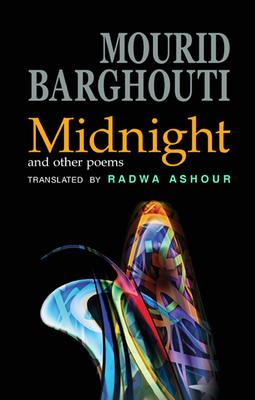
I’m linking to a six-part blog I wrote for English PEN around the publication in December 08 of Mourid Barghouti’s Midnight & Other Poems, to which I contributed a substantial introduction [you can read it here.]

Midnight is available from ‘all good bookshops’ as well as its publisher whose resourceful pages begin here. A properly weighty review of Midnight by Boyd Tonkin of The Independent appeared in January 09.

Mourid Barghouti’s excellent website is here. His classic memoir I Saw Ramallah is widely available, not least from its UK publisher whose site also contains an extract which demonstrates how essential, tough-minded and exquisite it is. A sequel appeared in Arabic in 09 [with a title that translates as; I Was Born There, I Was Born Here] and is on its way into English.

The Bombing and the Brink

by Guy Mannes-Abbott [with thanks to Sophie Mayer and English PEN World Atlas.]

Part I, Part II, Part III, Part IV, Part V and Part VI -which includes a link to the whole piece.

Words did not and cannot defend displaced and besieged civilian populations against the use of white phosphorus, for example, but they can and should undermine attempts to justify or deny that use and, most critically, hold its users to account.