on the politics of the dead child -occupation vs humanity

independentLondon

What is a Palestinian State Worth? By Sari Nusseibeh

Reviewed by Guy Mannes-Abbott

Friday, 22 April 2011

Writing about William Wordsworth, Jacques Ranciere celebrated a consideration for “all that is too small” in his poetry about the post-revolutionary landscape of France. The theorist also articulated a post-millennial consensus; lauding the poet for taking care of “the dead child that every politics abandons”. Such a child is the moral focus of Sari Nusseibeh’s new book, but with unintended results. Continue reading “on the politics of the dead child -occupation vs humanity”

on the biting wisdom of poets [two], mahmoud darwish

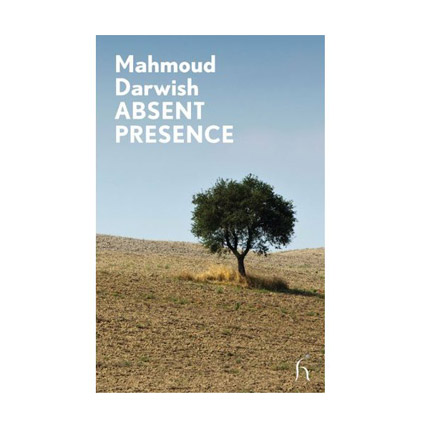
Mahmoud Darwish Absent Presence Hesperus CoverMine is a very short review in today’s Independent [in which you can also read Robert Fisk direct from al Tahrir Square, Cairo!] but then it’s a very short book and I couldn’t pretend that length diminished this version (in Mohammed Shaheen’s translation) of Darwish’s Absent Presence!

I’ve quoted Mahmoud Darwish’s own use of the word “baffling”, below. What is truly baffling is that in English there are almost as many translators as editions of his books. A lesser voice would have been neutered by this, but Darwish is a national writer on a par with any nation and simply deserves better.


Screenshot 2018-03-12 10.30.56

Absent Presence,

By Mahmoud Darwish

Lessons in life from the great divide

Reviewed by Guy Mannes-Abbott

Monday, 31 January 2011

Mahmoud Darwish was a giant of world literature.

This elegant edition of the last completed work before the Palestinian poet’s death in 2008 makes clear why. Absent Presence is a huge little book which defies conventional categorisation. It offers costly wisdoms Continue reading “on the biting wisdom of poets [two], mahmoud darwish”

on radwa ashour’s spectres/atyaaf, in today’s independent

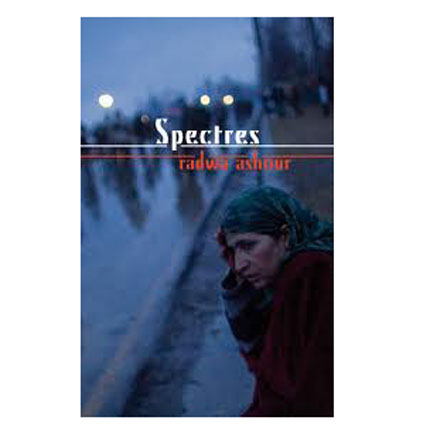
Radwa Ashour Spectres The Independent

Spectres (Atyaaf),

By Radwa Ashour

Trans Barbara Romaine

Pleased to see my very short review, shortened further to fit, of Spectres in today’s Independent: “Personal, Political and Painful” [UPDATE see below for full original review & an update from MW’s obituary for Radwa].

It ends;

Spectres combines invention, unofficial history and human abyss in an elliptical novel in which Ashour articulates an ethics rooted in Arabian and ancient Egyptian cultures. The result transforms a bleak constellation into a quietly stirring beacon. Spectres provides an irresistible companion to Barghouti’s memoir I Saw Ramallah, and a contrast to Elias Khoury’s more traditional Gate of the Sun. Spectres is a boldly original novel by an important writer whose exemplary work we need more of in English.”

I had a little more to say, but would only add now that the companionship with those two titles was predicated crucially on the words, “in translation”, thus referring to the disgracefully small pool of Arabic writing yet in English. As it stands it might be read as a weird and old-fashioned kind of valorisation, no? The word “demanding” has also gone from elsewhere, and again, I only mention it because though it’s indubitably great to see the novel celebrated in The Independent, it is the best of things; a demanding read in more ways than one.

My similarly tiny review of the Mahmoud Darwish’s rivetingly demanding Absent Presence (in the Mohammad Shaheen translation) will appear in due course… (UPDATE 2018: clean link here.)

Continue reading “on radwa ashour’s spectres/atyaaf, in today’s independent”

on appetite and a mystic chef, george steiner essays, new statesman 1995

George Steiner August 2008

Or; If Kafka were Hindu…

Every now and then I wonder about George Steiner. Mostly it’s positive wondering but something bugs me about him and it’s not what seems to bug most people I know or read that have met him or committed their view of him to print. Much of the latter is merely a distaste for overt intellect, especially a passionate ‘continental’ mind as well as distrust of the whole dynamic of translation, literally and metaphorically.

There are pedagogic and vulgar ego issues when it comes to Steiner but let me say in brief that I dissociate myself from the cynical Brit approach to him. What continues to bug me is essentially what bugged me when I committed myself to print 15 years ago [in the New Statesman, see below]; I hate it that he won’t credit Kafka, Mozart, even little me with the capacity -effort, hours/years of silent striving and error, the beauty of the attempt- to invent.

Instead, it wasn’t Kafka or Mozart it was “god”. Who? you might say. Religious faith is one thing [later, in Errata, he described himself as a “messianic agnostic”, which is anticipated in what I wrote below], but to misrecognise the grand smallness of human effort, endeavour and appetite is wrong as well as pitiful.

Steiner is a man with a good brain and that brain has famous and all too real appetite but it strikes me therefore as worse that he closes it all down when he approaches a peak to indulge in ‘god’-whistling instead. Such vacuity is the opposite Continue reading “on appetite and a mystic chef, george steiner essays, new statesman 1995”

on getting well soon, amin maalouf’s origins 2008

AM: “what I would like to do is leave ajar the door to my office”


Amin Malouf had only just got started with a nice blog [here] before that same blog announced on March 13th 2010; “As some of his friends already know, Amin has had some health concerns that have kept him away from this blog for the last few months. He hopes to be back soon, and he extends to everybody his heartfelt apologies and his best regards.”

Wondering today if there were news and hoping it might be good news; recovery and a return to writing even, I remembered that I wrote a very short review of Origins, his last book to be translated into English, for The Independent and decided to post it below.

Meanwhile, enjoy this [inevitably contentious yet intriguing] page of his;

My Web of Words;

1-Alcohol. 2-Turkey. 3-Orange. 4-Roumi. 5-Greek.  6-Egypt. 7-Franc. 8-Mattress. 9-Baghdad. 10-Table.  11- Punch. 12-Rose. 13-Apricot. 14-Hazard

His UK publisher’s page for Origins is here.

Screenshot 2018-03-12 10.30.56

Continue reading “on getting well soon, amin maalouf’s origins 2008”

paul auster, the sun never sets…

Paul Auster BOMB 1988 Photo © Susan Shacter

Auster has yet another new book due in November in the UK; Sunset Park here. I’ve not seen it yet and may yet write about it critically. Meanwhile, I’m reminded of an interview-based critical profile I did for The Independent around publication of the honourably slight Timbuktu which doubled with a screening of Lulu on the Bridge in London [ignored by distributors here despite or because of it being Auster’s directorial debut] as well as his contribution to Sophie Calle’s Double Game. Faber have just published the script again in a collection of his screenplays [Smoke, Blue in the Face, etc.], see here. Btw I don’t buy PA’s Beckett analogy below, not fully, and neither does Auster I’m sure.

Continue reading “paul auster, the sun never sets…”

doing a mahatma, james salter’s paris review interview online

The Art of Fiction No. 133 ManuscriptOh the lengths I indulged to get a copy of this a few years ago! I love an excuse to return to Salter and his Paris Review interview from the Summer 1993 issue [127 The Art of Fiction no. 133] being online now is enough for me. Here’s a tiny bit of it extracted from my rather long essay [Meeting James Salter];

“In the Paris Review interview of 1993 Salter said “I’ve never had a story in The New Yorker, everything has been rejected.” Of the 11 stories in Dusk -half of which are classics of the form- 9 were rejected by The New Yorker. He didn’t think to submit the other two.

Continue reading “doing a mahatma, james salter’s paris review interview online”

on not meeting edward said, who was right then and is right now

I enjoy unlikeliness and it seemed unlikely to me that Candia McWilliam would find herself in Edward Said’s memoir of his early life; Out of Place: A Memoir [Granta 1999]. That she does so in her own memoir [What to Look for in Winter: A Memoir in Blindness Cape 2010/Vintage 2011] is one of many endearing things about it and its author. Also a high recommendation for Said and his own memoir.

I spent a number of mornings in June this year running past one end of Edward Sa’id Street in Ramallah, actualising the way he and his work feature near the beginning of my adult life and have been returned to repeatedly ever since. I’m posting an old review I did for The Independent of his collection of pieces The End of the Peace Process: Oslo and after [Granta 1999 -out of print/PenguinRandomHouseUS 2001 -linked] [BELOW]. Read almost anything of Said’s [especially on the question of Palestine] and the absence of a voice like his today makes you weep.

Continue reading “on not meeting edward said, who was right then and is right now”

Russell Hoban lost and found, for the record [like it’s 19_99].

With another new novel due from Russell Hoban this Winter [Angelica Lost and Found, Bloomsbury], I’m re-archiving a profile/interview/critical piece I wrote for The Independent near the beginning of his admirably sustained resurgence -if I can put it like that.
So much earnest nonsense is regurgitated in the British press about ‘lateness’ in the writing of fiction -usually from the chin of Martin Amis- that I enjoy the way that Hoban continues to take his chances, give his best shot, make more writerly attempts. I admire him as a writer as such, rather more than for his writing sentence-by-sentence, which I hope I articulate with more precision below.

Some of my favourite works of fiction -let’s just instance Bouvard and Pecuchet– were written not only ‘late’ but too late -in that they’re not ‘finished’. Actually, I shouldn’t blame Amis [whose Success, Money and Experience will last] for having his thoughts/neuroses on the subject, but those who have reported boyish bar-talk so solemnly throughout my entire adult life!

So here is the Hoban rescued from The Independent’s patchy site. One thing; mention of a blue plaque [in a sentence with a cut and now edited-back-in second half for clarity] was a joke! Right? Obviously. Or it would be obvious to anyone that knows him or his work, or indeed me and mine. In the back of my mind were the ironies of memorialising Edgar Allan Poe’s short time in London -The Man of the Crowd, all that.

His British publisher’s page is here and a well-stocked ‘reference page’ is here.

A first review of Angelica Lost and Found is here.

Continue reading “Russell Hoban lost and found, for the record [like it’s 19_99].”

cerith wyn evans’ final week at white cube central london; go, go, go!

S=U=P=E=R=S=T=R=U=C=T=U=R=E Cerith Wyn Evans 2010

“Everyone’s gone to the movies,

now we’re alone at last…”


I finally made it back to see Cerith’s show at White Cube’s Mason’s Yard which is, I want to emphasise, just off Piccadilly in central London. The show closes on May 22 and I urge you to drop by to catch a stunning and substantial installation of recent works which makes the space live so well that it claims possession of it.

My hopes were high for this show but I had to rush through an opening that was as busy as you might expect to be somewhere else. As a result I didn’t quite trust my impression that CWE had drawn all the currents in his work together into something quite so winningly complete. That is -at its most elemental- influence and intellect, taste and fancy all deliver something complex here that is coherent only as visual art. It’s clarified resonance would justify permanent -or DIA-style- installation in the site.

A peculiarly all over the place month made returning impossible, but the work lingered and I had to see it again especially if I were to scribble something here…

Continue reading “cerith wyn evans’ final week at white cube central london; go, go, go!”