on odes to mud, utopian dust and insurrectionary trees

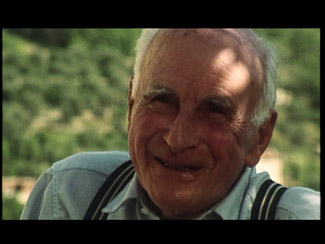
Francis Ponge [still taken from http://www.OnlineProductions.fr whose link is dead in 2022]

Primarily, this is a brief advertisement for CB Editions‘ irresistible bi-lingual edition of the great Francis Ponge; Unfinished Ode to Mud, translated by Beverley Bie Brahic in 2008. It’s a selection from what she has translated as The Defence of Things and Pieces, some of the latter being their first appearances in English…

So, firstly, please get hold of a copy of the book from the publishing miracle that is CB Editions whom, it’s worth knowing, work on very short print runs. I have no links etc., but urge you to take up their current offer here, while getting hold of this beautiful selection and give copies to people that you wish loved you…

‘Unfinished Ode to Mud’ itself, is also an ode to the Resistance Continue reading “on odes to mud, utopian dust and insurrectionary trees”

on elias khoury’s ‘as though she were sleeping’ in today’s independent

Looking like Yaffa in ’48…

Screenshot 2018-03-12 10.30.56

As Though She Were Sleeping, By Elias Khoury

Reviewed by Guy Mannes-Abbott

Tuesday, 9 August 2011

Journeying towards Mount Ararat, the Russian poet Osip Mandelstam wrote of cultivating a sixth sense, “the sense of attraction to a mountain”. Writing about food, American novelist James Salter quoted Brillat-Savarin approvingly on his notion of a sixth sense, “physical desire”. The other five senses, he wrote, are optimised only in “sexual union”.

The Lebanese writer Elias Khoury belongs in such exalted company in literary terms. His new novel also pivots on mountains – in Lebanon – and appreciations of sexual union. Indeed, it was one of many books banned by the Mubarak regime for its explicitness. Khoury writes about the scent of words, which take on such immaterial qualities that writing itself works like a sixth sense in his fiction.

Read more here or Continue reading “on elias khoury’s ‘as though she were sleeping’ in today’s independent”

on hosni, why change always involves force…

I’ll keep it brief, but isn’t it nice to see Hosni!

It seems so long now and I for one have been missing him. Of course his ‘former’ colleagues remain largely in place and there’s a long way to go to even begin to consolidate the revolution. But the break with the past is good, the rest we know will take blood, resolve and time…

Of course, the regime has been pushed to get this far, almost week by week, and that will go on until real change is achieved. Change only ever happens like this. When someone tells you that shouting, anger, protest, rebellion even defensive or strategic acts of violence never gets anyone anywhere, as autocrats large and small always waste their breath saying, well; laugh in their faces and press on…

I’m sure Fruit Store regulars know from your own experience that tired, jaded, reactionary, conservative, No-sayers always only ever respond to force -or anyway forcefulness- however boring it is to have to resort to it. In that respect there are continuities between Tahrir’s very expensively acquired and yet only partial freedoms and much less dramatic ones closer to home -and yes, I’m writing as an urbanforester  when I make that point [not that the extrapolation necessarily works the other way around, of course].

Anyway, hooray-hello-Hosni; lets see much more of you and yours in future and work painstakingly through your crimes to ensure that justice is seen to be done and change is institutionalised.

Meanwhile, check the current issue of Bidoun and it’s programme of summery Seminars at the Serpentine here.

on ‘in ramallah, running’ -it’s official; publication is [NOT!] february 2012 [UPDATED]

In Ramallah, Running 2010′ by Guy Mannes-Abbott

Manuscript in first draft, 5 of 14 scrolls/parts

In Ramallah, Running is now contracted to appear in February/March 2012 with Black Dog, more details/announcements to follow [24.04.2012 UPDATE: publication pushed back into summer 2012, watch for update very soon].

I’m very happy because the book was conceived and developed independently and will appear within the kind of urgent time frame that is appropriate to its subject and hard to achieve without compromise -or at all. I finished my 20,000 word series of e.things -a unique conjuring of place as well as the people of Ramallah and almost the whole open-air camp that is Ramallah District- in mid-September 2010 [after my Residency at al Qattan Foundation in Ramallah]. The series is made up of fourteen parts, alternating running within the limits of the city and walking out from it to, along, beyond and off limits, discovering how mobile they are. How they really work.

e.things as a form were crucial to this project because they’re the only way I could say what needed to be said. Often exhibited or published in a visual art context [with the best visual minds of my generation!], they’ve grown into a highly singular body of texts; the shortest of which is a single line called ‘go’ from 1997, the longest is this series; In Ramallah, Running. Continue reading “on ‘in ramallah, running’ -it’s official; publication is [NOT!] february 2012 [UPDATED]”

on the country of the blind in full detail & downloadability

The Country of the Blind and Other Stories Installation shots CAMP with GM-A Folkestone Triennial [ongoing]

CAMPuter.org now has a good page on the film here with cat. text, shot-lists, stills, credits… There’s also a link here to pad.ma where the film is archived…

But I strongly recommend heading down to Folkestone, not only to see the film in situ where it’s installed beautifully and offers optimised-viewing, but also to see all the other art on show throughout a fascinating town. The harbour tastes irresistible and in the pubs on the water  front a version of the film is always looping…

Folkestone Triennial’s page is here and they have weekend tours conducted by some high calibre guides not least this weekend with Achim Borchardt Hume here. It takes 53 minutes to get there…

Thanks everyone for the positive feedback.

on an art of two-sides, mathaf interference at ICA

Shumon Basar and Jack Persekian Wash Hands…

Jack Persekian’s performance of Nablus Soap at the ICA, as part of the Mathaf’s Interference weekend, was brilliant.

The work takes off from a show he put on with Mona Hatoum back in the early days in Jerusalem. It recounts that earlyness, the basic space, cold and uninviting and the process of arriving at the piece –Present tense [1996]- by Mona H., its installation and the historical context of a disastrous willingness to compromise with Occupation in the form of ‘Oslo’. An apologetic Abu Amar is scratched-in which raised a big laugh and the whole piece is damn fine, not least as testament to Nablus.

As Jack and Shumon talked, the film was paused on one of the many Occupation watchtowers that terrorise the Palestinian Hills, lest any of us forget the bloody stain it represents… Continue reading “on an art of two-sides, mathaf interference at ICA”

on unintended consequences, naaem mohaiemen’s the young man was…

Excellent piece/interview on The Young Man Was…: Part 1, United Red Army, Naeem Mohaiemen’s film that was first shown at Sharjah Biennial X -and which I wrote about ‘live’ here. Naeem has a page on the film/project here.

Don’t miss the film whenever/wherever it screens. Interesting to see in some relation to Assayas’s surprisingly good biopic Carlos, which is still a very different project obviously [read Jonathan Romney here]. Continue reading “on unintended consequences, naaem mohaiemen’s the young man was…”

on tahrir, the poetry of revolt etc.

Leave/Irhal – ‘Kodak Agfa’ February 1

Yes, yes, catching up; I’ve just come across this online publication; Shahadat at ArteEast. Its April edition is available here only. Click on the Shahadat image on the page to find a nicely situated ‘gallery’ of ‘protest signs, graffiti and street art’ -including this particular irhal...

ArteEast is always worth checking, especially the magazine, but then you know that…

Doesn’t it seem a long time ago now? How it warmed the winter for me and most everyone I know… How glad I am that Egyptians recovered their independence and civility sufficiently to stop collaborating on the siege of Gaza… How much further to go…

There was also a great piece back there on the language of the protests/revolt by Elliot Colla in the excellent Jadaliya, which some of you may have missed here. I strongly recommend his history of the poetry of revolt, dated January 31 by the way…

[With thanks to Sam Wilder for this latter.]

on the politics of the dead child -occupation vs humanity

independentLondon

What is a Palestinian State Worth? By Sari Nusseibeh

Reviewed by Guy Mannes-Abbott

Friday, 22 April 2011

Writing about William Wordsworth, Jacques Ranciere celebrated a consideration for “all that is too small” in his poetry about the post-revolutionary landscape of France. The theorist also articulated a post-millennial consensus; lauding the poet for taking care of “the dead child that every politics abandons”. Such a child is the moral focus of Sari Nusseibeh’s new book, but with unintended results. Continue reading “on the politics of the dead child -occupation vs humanity”

sharjah biennial 10, petition update

I’m ‘hosting’ this update because I want to support all those who made Sharjah Biennial 10 such a particularly special, even unique event across a wide range of activities and forms.

I’m framing it because these are not my own words, however close I might feel to their plea. I understand and sympathise with the dismay and indignation as well as the urgent hopes expressed that some transparency about what happened, an articulation or plausible narrative will emerge soon. Often The How is as important as The What -something which an unrelated campaign I’m involved in at home in London reiterates strongly.

Credibility is everything; very hard to achieve, impossible to fake, priceless to possess, lost very quickly -and then really hard to recover if at all…

PR, on the other hand…

[continued below…]

[ENGLISH] Dear friends and colleagues,

Following the abrupt dismissal of Sharjah Art Foundation’s Director, Mr. Jack Persekian Continue reading “sharjah biennial 10, petition update”
