future movements jerusalem, startlingly good review on babelmed

Shuruq Harb Wiki City 2010

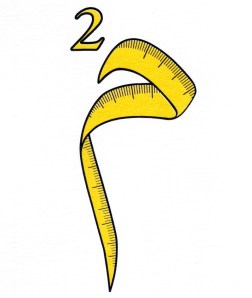
“The highlight of this year’s Liverpool Biennial is the art from Palestine on show in Future Movements Jerusalem. It’s art made against the forcings of Occupation, about a city currently forbidden to most of the artists in the show.”

My piece about this excellent show has just been published here on Babelmed, a really admirable and completely independent ‘Mediterranean culture site’ based in Rome, which appears in English, Italian, French and Arabic editions.

Continue reading “future movements jerusalem, startlingly good review on babelmed”

nb, visual art noticeboard [alternatives to friezing…]

Dirk Stewen untitled [bronx monkey II]

Dirk Stewen untitled [Bronx Monkey II] at Maureen Paley

I’ve been enjoying quite a few shows recently which are likely to be blown out of the water by the imminent frieze fair and so with mighty respect to the latter I thought I’d flag them up as alternatives…

Future Movements Jerusalem at Liverpool Biennial [18 Sept-28 Nov 2010] is an essential exhibition of work from and about Palestine. I posted on Raouf Haj Yihya’s Meter Square here, the New Statesman bravely ran a rather muted piece here and my own review will run at Babelmed shortly. Surprise yourself if you can get to it, or wait for it to travel south as I know it is scheduled to do. But be sure to see it.

Otherwise, Liverpool is a far better Biennial than scarce notice of it by lazy old journos suggests; everyone rightly notes the almost painfully compelling acid-Warhol-mashup-vids of Ryan Trecartin’s but there’s much else, including NS Harsha’s very nice installation [right] at 52 Renshaw Street and not least at Tate Liverpool -where a dubiously conceived but actually nicely put together show called The Sculpture of Language by Carol Anne Duffy exhibits some great and rarely aired works.

Dirk Stewen at Maureen Paley [08 October — 14 November 2010] is the most winning new work in town for me. If you do make it to the frieze jamboree then add this show to your bottom-line schedule otherwise you’ll have failed yourself and London. If you’re not friezing it then take advantage and spend some time in a show spread over two floors, beautifully arranged/hung works combining utopian gesture with extraordinary concentration, tentativeness and beauty. The work seems hardly there at all and yet surprises/delights with a precision that makes for indelibility. It’s Stewen’s first show in London, I’d never seen the work before and this exhibition made me happy to be alive; don’t miss it! Continue reading “nb, visual art noticeboard [alternatives to friezing…]”

the model hip! hip! ben sonnenberg

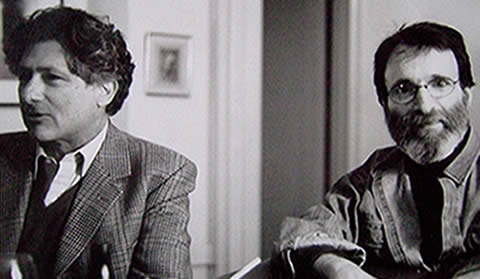
Edward_Said_With_Ben_Sonnenberg

Edward Said and Ben Sonnenberg mid-80s [Photo Alexander Cockburn]

I liked and admired Ben Sonnenberg [though can’t claim to be one of his many close friends, nor did I ever meet him]; a man whose mind encompassed [and published] Anne Carson, James Salter and Edward Said, who understood what money was for, someone who left his beautiful and brilliant Grand Street magazine as the model of a good mind at work.

This piece by Alexander Cockburn [here link updated Apr 2020. PDF added below] is  a very warm remembrance of his friend Sonnenberg [1938-2010] following his memorial service in September, which I recommend to you:

“My favorite autobiographers in this century are Vladimir Nabokov, Theodor Adorno and Walter Benjamin.” A paragraph later he cited “my friend Edward Said,” whose savage essay “Michael Walzer’s ‘Exodus and Revolution’ – a Canaanite Reading” Ben had published in Grand Street in 1986.”


You might also dig up Salter’s account of Sonnenberg in Burning the Days; his much-admired aplomb in general and in the face of MS. Cockburn quotes Sonnenberg taking an elegant lance to The New Republic mag in 1989; oh for “puckish” courage of that kind today.

Continue reading “the model hip! hip! ben sonnenberg”

settlements app, the actuality is significantly worse

The Guardian reports [here] on the launch by American Friends of Peace of an app -Facts on the Ground- designed to keep the shameless growth of illegal settlements to hand. The idea is that, just as with previous historical examples of massive or sustained crimes against humanity, you can’t say you didn’t know. [Re; imminent end of temporary freeze, expect another shorter one with various exclusions -and renewed slaughter somewhere or other- by the masters of exceptionalism. Or out and out resumption of same. They won’t actually stop, they will have to be stopped, actually.]

iPhone Screenshot 1

So it’s very welcome; you can check the number of illegal settlers of a hyper-nationalist or -religious persuasion and how much of the settlement is classified as “private Palestinian land” just as easily as you can check how many Boris Bikes are at each stop. My only complaint is that even with this to hand the actuality is underplayed. How do I know? Because I’ve walked around these very settlements, onto overlooking hills and photographed them only this summer. I’ve witnessed the actuality and know the truth. Just as every Palestinian imprisoned in the otherwise gorgeous hills knows -something you might ponder.

Continue reading “settlements app, the actuality is significantly worse”

the great game, raouf haj yihya in liverpool

If you can’t get to Liverpool for the current Biennial [18th September-28th November 2010], and especially to the Future Movements Jerusalem section of the City States show at the Contemporary Urban Centre [curated by Samar Martha], then at least you can sample one of the art works here [Press image to play, it takes a few seconds to load].

Continue reading “the great game, raouf haj yihya in liverpool”

mourid barghouti, i was born there, i was born here

ولدت هناك، ولدت هنا   مريد البرغوثي

This is the front cover of my very own copy of Mourid Barghouti’s latest book I was Born There, I was Born Here, published by Riad El-Rayyes Books in May 2009. In Nablus you can pick up a cheaper pirate copy, but this one is the original with an embossed cover from Dar al Shourouk in Ramallah again.

I excuse my own excitement because I remember when Mourid first mentioned that he was writing this and have been waiting impatiently for its account of the period post 1996 when he was first able to return home -as recounted in the classic I Saw Ramallah- all the way up to and beyond the 2006 elections.

At this stage my Arabic makes reading this very slow work indeed, so I’m glad that Humphrey Davies has been appointed translator of the book and that the American University of Cairo Press [AUC] are scheduling the English translation for November 2011. I know that Bloomsbury were anticipating publishing the book in the UK and will update on both fronts when I receive confirmations. [Yes! Fall 2011 is the scheduled publication date for both.]

Meanwhile, there’s an intriguing 2000-word blog on the book, a first English language review including quite extensive translated passages, here, which I recommend to you.

Finally, given the familial dimension of this book -Mourid visits the alleys and suqs of al Qds/Jerusalem as well as the village of his young life Deir Ghassanah with son and poet Tamim- I can’t resist sharing my pleasure at seeing that novelist, academic, wife and mother Radwa Ashour has a newly translated novel, Spectres [Atyaf], forthcoming from Arabia Books [UK], who have a page here. I hope this will mark the beginning of good translations of all her works into English. In any case the arrival of this one is a major event.

Riad El-Rayyes Books [Arabic] website is here.

AUC Press is here.

Arabia Books here.

Nur Elmessiri article on Radwa’s Atyaf/Spectres in Al Ahram [1999] here.

My earlier post on Mourid’s Midnight and Other Poems, which Radwa translated -and for which I wrote the Introduction– is here.

‘Mourid and Tamim Barghouti with Ahdaf Soueif’ event at the Southbank Centre London, Saturday November 6th is here.

on not meeting edward said, who was right then and is right now

I enjoy unlikeliness and it seemed unlikely to me that Candia McWilliam would find herself in Edward Said’s memoir of his early life; Out of Place: A Memoir [Granta 1999]. That she does so in her own memoir [What to Look for in Winter: A Memoir in Blindness Cape 2010/Vintage 2011] is one of many endearing things about it and its author. Also a high recommendation for Said and his own memoir.

I spent a number of mornings in June this year running past one end of Edward Sa’id Street in Ramallah, actualising the way he and his work feature near the beginning of my adult life and have been returned to repeatedly ever since. I’m posting an old review I did for The Independent of his collection of pieces The End of the Peace Process: Oslo and after [Granta 1999 -out of print/PenguinRandomHouseUS 2001 -linked] [BELOW]. Read almost anything of Said’s [especially on the question of Palestine] and the absence of a voice like his today makes you weep.

Continue reading “on not meeting edward said, who was right then and is right now”

kanafani’s rijal fii al shams/men in the sun, a celebration

I’m just celebrating my acquisition of the book in Arabic from the huge and richly stocked Dar al Shourouk -which is nicely complemented by the small and richly stocked al Jameat- in Ramallah. Since posting on Kanafani I want y’all to know that search engines connect someone to that page every day, which suggests a significant market for the book.

I’m pleased to see that Arabia Books have just re-issued Emile Habiby’s The Secret Life of Saeed the Pessoptimist and have a page on it here. (Updated Mar 2018) With the warmest respect to Kanafani’s publisher in Colorado [in English] and in Nicosia [Arabic] I do wish there were a UK edition…

Meanwhile Men in the Sun is available from UK distributors here.

Dar al Shourouk’s Arabic website is here and they can be contacted at shorokpr [at] palnet [dot] com

Al Jameat can be contacted at al-jameat [at] maktoob [dot] com

no settling for occupation, palestine 2010

Under the kind of Occupation that Palestinians have been for decades there is literally no room for manoeuvre, very few forms of resistance. A new P.A. law banning the sale of Settlement produce -and Palestinians to work in the Settlements by 2011- is a difficult yet undeniable achievement. The difficulty is that working within these illegal zones [42% of the ‘west bank’ and rising] has been a scarce source of income for those imprisoned in the Palestinian hills.

There are many things wrong with the P.A., here is one thing they’ve got right. My own recent realisation that most of what is possible to eat in occupied Palestine is prison food -controlled/supplied by the Occupation- was mortifying and underscores why this ban is a difficult one to make and sustain. Outside occupied Palestine, it’s the easiest thing in the world to boycott the fruits of this uniquely chronic and brutal Occupation. It’s dead simple; do you want to be sustained by crimes against your  -or your children’s- own humanity?

Continue reading “no settling for occupation, palestine 2010”

tony judt; speaking increments and acts to “the young” in ‘ill fares the land’.

Tony Judt’s Ill Fares the Land is the kind of passionate polemic that Britain no longer does. It’s objective is to define the barbaric state we’re in in such a way as to generate articulate responses that will change it. The tool is an accessible discursiveness aimed explicitly at youthful agents of change.

Urgency is required because, as Judt says in his opening line, “Something is profoundly wrong with the way we live today.” Urgency also reflects the author’s suffering from the terminal effects of a rare form of motor neuron disease. That this book arrived so soon after his heroic October 09 lecture at the Remarque Institute [see link below], is to the significant credit of all parties.

Judt’s introductory mapping continues like this; “For thirty years we have made a virtue out of the pursuit of material self-interest: indeed, this very pursuit now constitutes whatever remains of our sense of collective purpose”. He concludes his book thus; “if we think we know what is wrong, we must act upon that knowledge.” But “our disability is discursive”; to act requires words; the articulation of a common purpose, including a recovered ability to preach what social democracy at its extant best practises.

Judt argues that the last 30 years have been aberrant and corrupting and he is largely right. He argues that the years between 1989 and 2009 were wasted on locusts and he is not entirely wrong. His polemic is broader than this though; it’s the loss of the 20th Century -with its significant if sporadic advances in civility- that he laments. More positively, he goes on to argue that what he calls the ‘left’ must celebrate and defend its achievements, though I don’t think he has Hardt/Negri in mind.

Continue reading “tony judt; speaking increments and acts to “the young” in ‘ill fares the land’.”