09.09. from baroda to bahrain and milton keynes; nasreen mohamedi

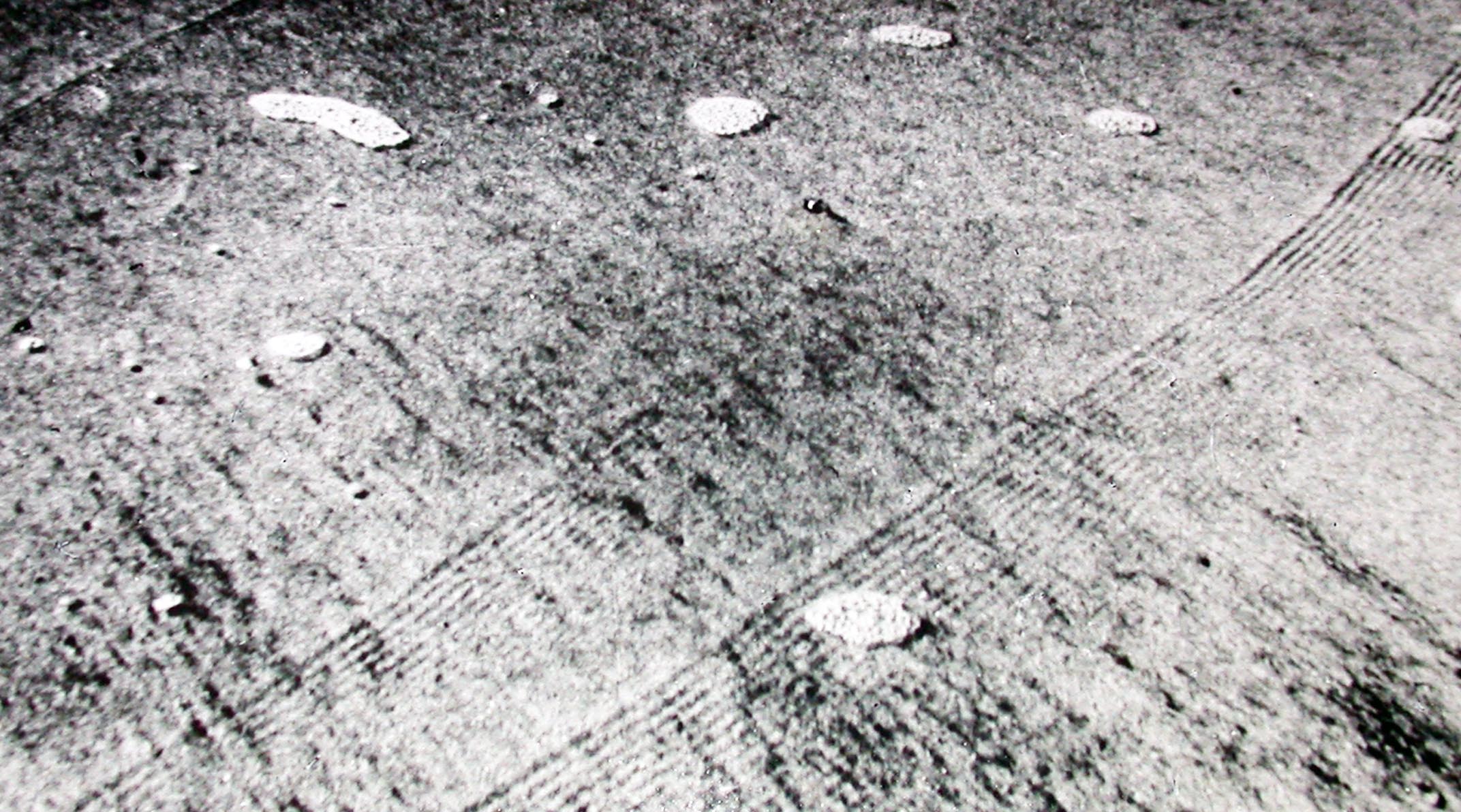
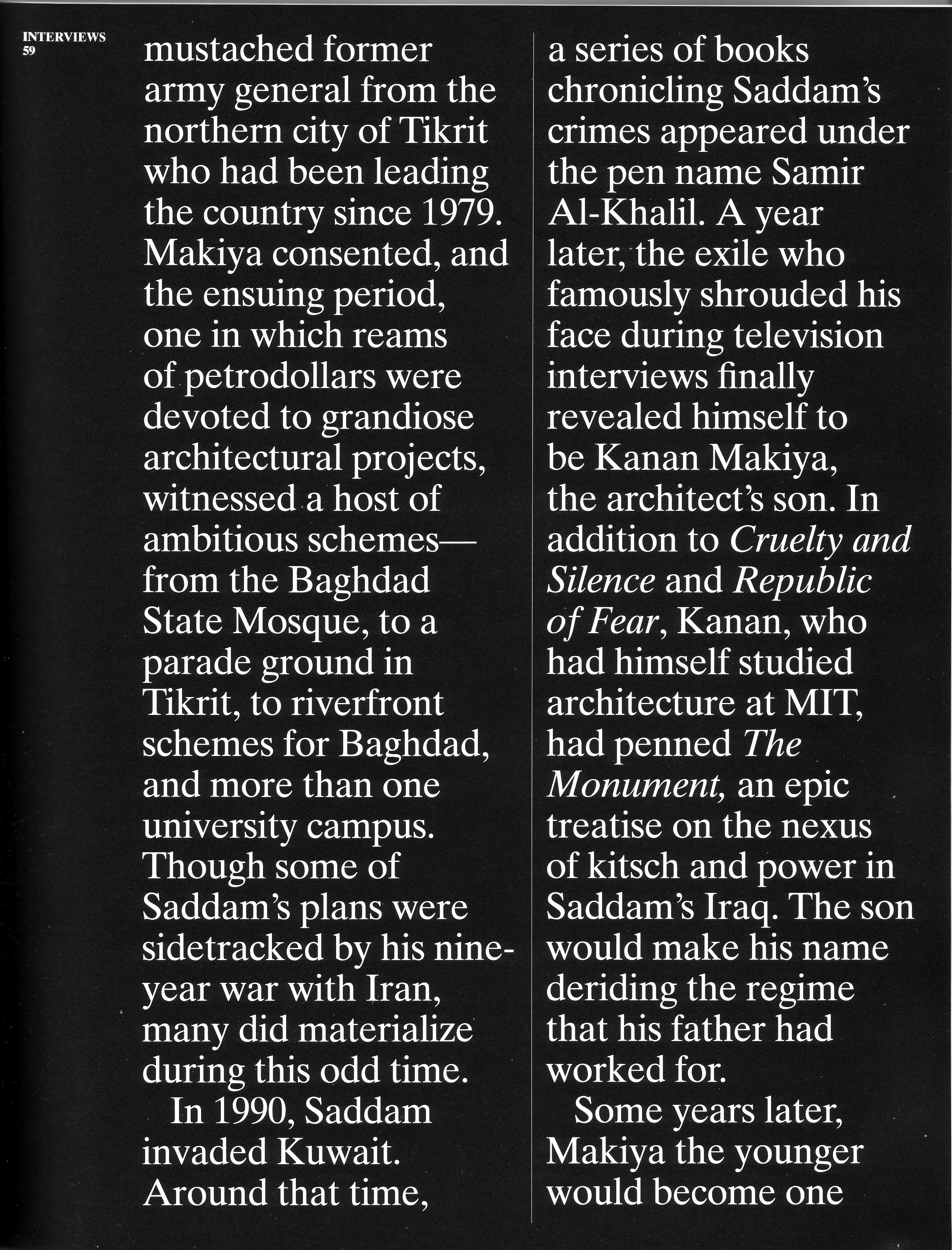
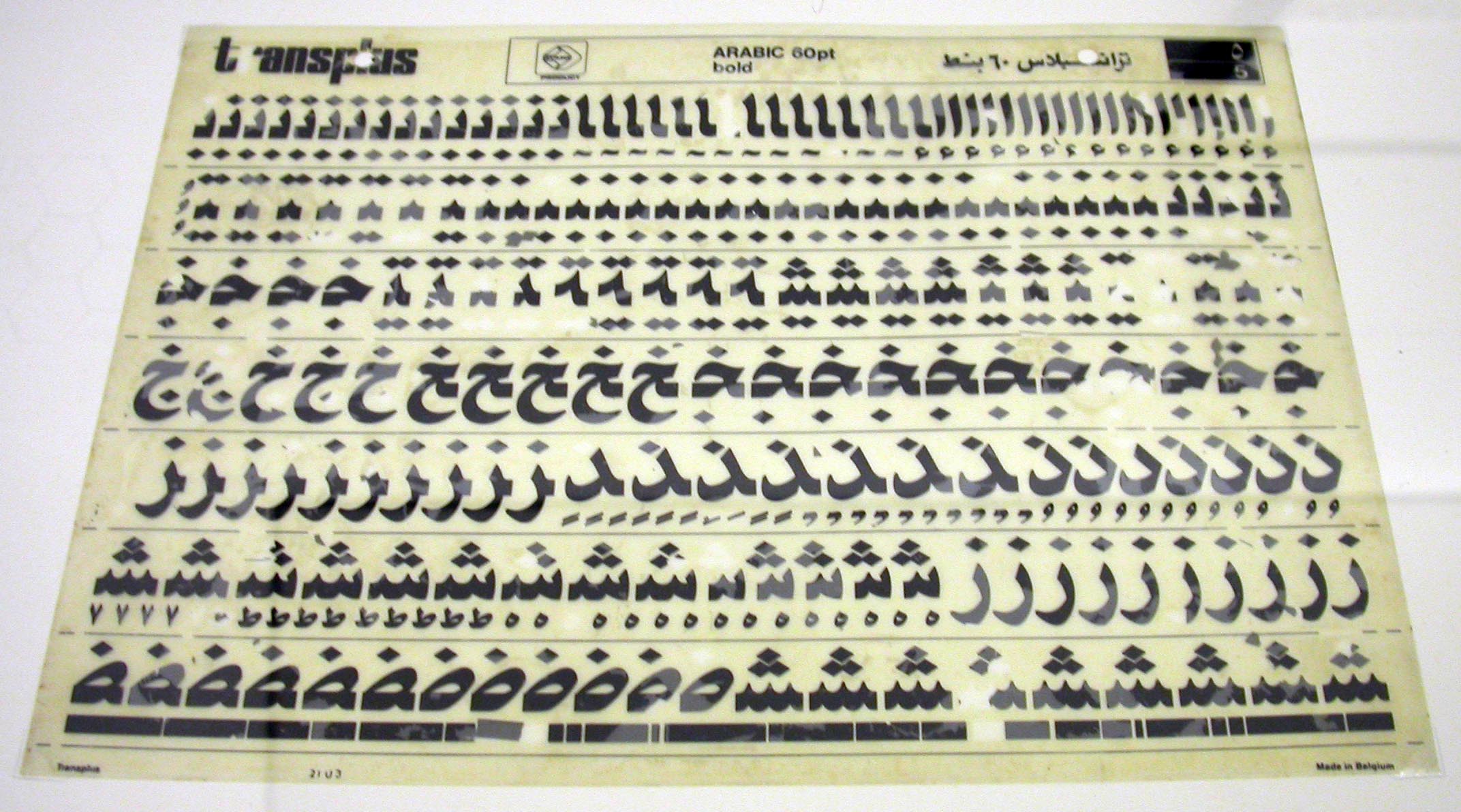
Arabic Letraset lettering from Nasreen’s studio memorabilia Ph Guy Mannes-Abbott

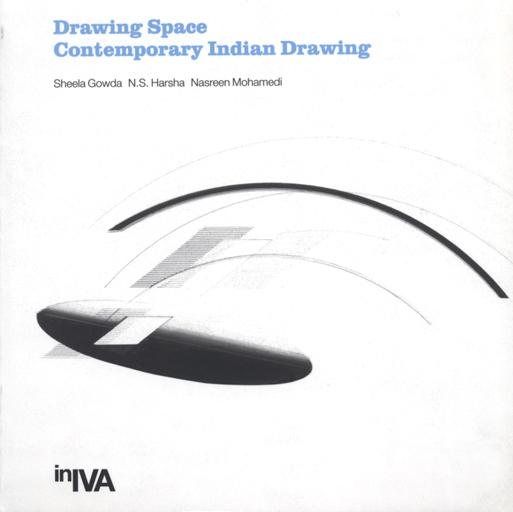
In September the fullest retrospective (Jan19link) so far of the work of the late Nasreen Mohamedi arrived at Milton Keynes Gallery. Nine years earlier, the curators of this travelling show, Grant Watson and Suman Gopinath, had asked me to write a catalogue essay for their ‘Drawing Space Contemporary Indian Drawing(Jan19link)  in London -which also featured Sheela Gowda and NS Harsha.

In 2000 NM’s work was almost unknown outside India and closely treasured within. It mesmerised me and became another of the endless roads that drew me to Gujarat. There I met her friends, as well as colleagues from Baroda’s Fine Art School where she taught for many years, most memorably the brilliant and beautiful Bhupen Khakhar who died in 2003. Before his death our friendship was sealed by witnessing the state-sponsored pogroms of 2002 [in which Muslims were burnt out and slaughtered across the state of Gujarat] trapped together in his car between burning road blocks and the main road where armed police gave cover to a well-organised ‘mob’.

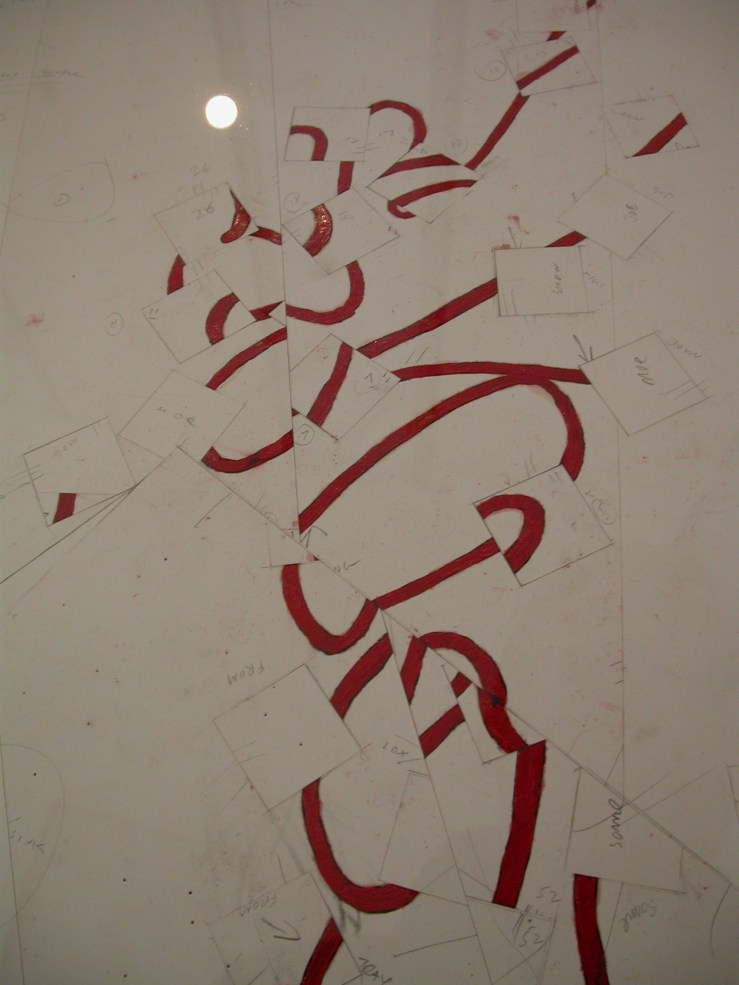
Extreme close-up NM artwork: grid-ungrid-diagonal-to-curve Ph Guy Mannes-Abbott

MKG drew together two sets of drawings [from her family and the Glenbarra Museum, Japan], the broadest range of photographs yet shown, some diary pages, early collages and several vitrines of memorabilia and working materials. One of these contained photographs of her with family and friends, some of which were taken at Bhupen’s studio-home. One shows her with another artist-friend, Krishen Khanna, long the owner of my great grandfather’s colonial bungala in Simla, where his studio is ‘cut’ in to the mountainside.

NM’s reputation has continued to grow since 2000, especially after she was ‘discovered’ at Documenta 12 in 2007! I expected MKG’s comprehensive exhibition to trigger proper recognition as well as consolidate her art historical place. While the latter is an ongoing process, it was disappointing to see that she remains just a little bit too much to take on board for incurious British minds yet.

Close-up NM photograph of sea water, foam and lines in the sand Ph Guy Mannes-Abbott

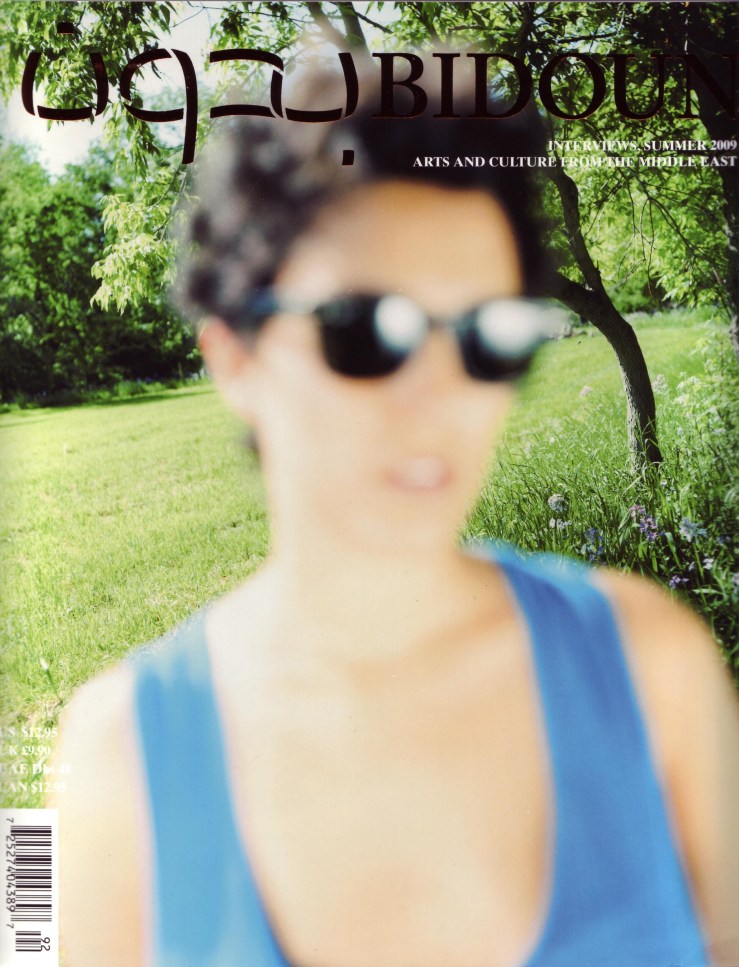
However I was happy to be asked by Bidoun to review the exhibition and although it’s only a short piece, no less delighted to see it in the current issue Noise [Winter 09/10] which you can rush out and buy! I’ll post it here eventually but meanwhile here are some other links;

The Drawing Space catalogue remains the best introduction to NM, reproduces some drawings, extracts from her uniquely worked diaries -including a reproduction- and a photograph of her minimal studio. Copies of the elegant little book [which is as good on Gowda and Harsha] are still available for £7 at inIVA here, or Cornerhouse here.

Norway’s OCA originated a smaller version of ‘NM: Notes – Reflections on Indian Modernism [Pt 1]’. Their site has a page linking to a pdf [8.51mb] of a booklet with some reproductions and a text by Grant Watson. A version of Grant’s text is also in Afterall magazine’s Summer 09 Issue, No. 21 here. That issue of Afterall contains the best reproductions of NM’s notoriously difficult to reproduce work currently available.

In NY The Drawing Center produced a good publication for their ‘Lines among lines‘ show in 2005, including Geeta Kapur’s revised essay on her friend, which I once thought eulogistic but now find increasingly resonant. Talwar Gallery in NY has an artist’s page of drawings and the photographic ‘sketches’ which she never intended to show but which are fascinating.

Until a properly thorough monograph exists with suitably high quality reproductions of the work, the best source remains Nasreen in Retrospect Ashraf Mohamedi Trust Bombay 1995.

08.09. from makiya to bidoun, within without

Mohamed Makiya is a huge figure. There are partial accounts of him and his work in three books in English, two of them by his son and former colleague Kanan. Start with KM’s Post-Islamic Classicism, a Visual Essay published by Saqi, 2001. Then there is a curious and fascinating essay in Lawrence Weschler’s Calamities of Exile; Three Non-fiction Novellas, Chicago UP 1998. Lastly KM’s The Monument; Art and Vulgarity in Saddam Hussein’s Iraq, California UP 1991 is a vital read and provides a variant approach to his father. Two other books in Arabic, one on MM’s early years, the other devoted to Baghdad, are helpful -the latter a glimpse at Makiya’s legendary archives on Baghdad and the region.

I knew some of his work and its context before I began, notably his brilliant and significant reconfiguration of the Khulafa or Suq al-Ghazal Mosque in central Baghdad and the massive Kuwait State Mosque [Archnet links updated Apr 2022. Their MM Archive here]. Nothing quite prepared me for the complex man, extraordinarily rich work and life that emerged from our conversations. My piece appeared in August and doesn’t resolve this or make up for the absence of a full monograph but it does present a rather different portrait than anything else in print.

Makiya’s life is part of the unwritten 20th Century, his work a monument to it -as well as many previous ones. I hope our conversation in Bidoun might provoke an attempt to show and tell the story of his work and life in full.

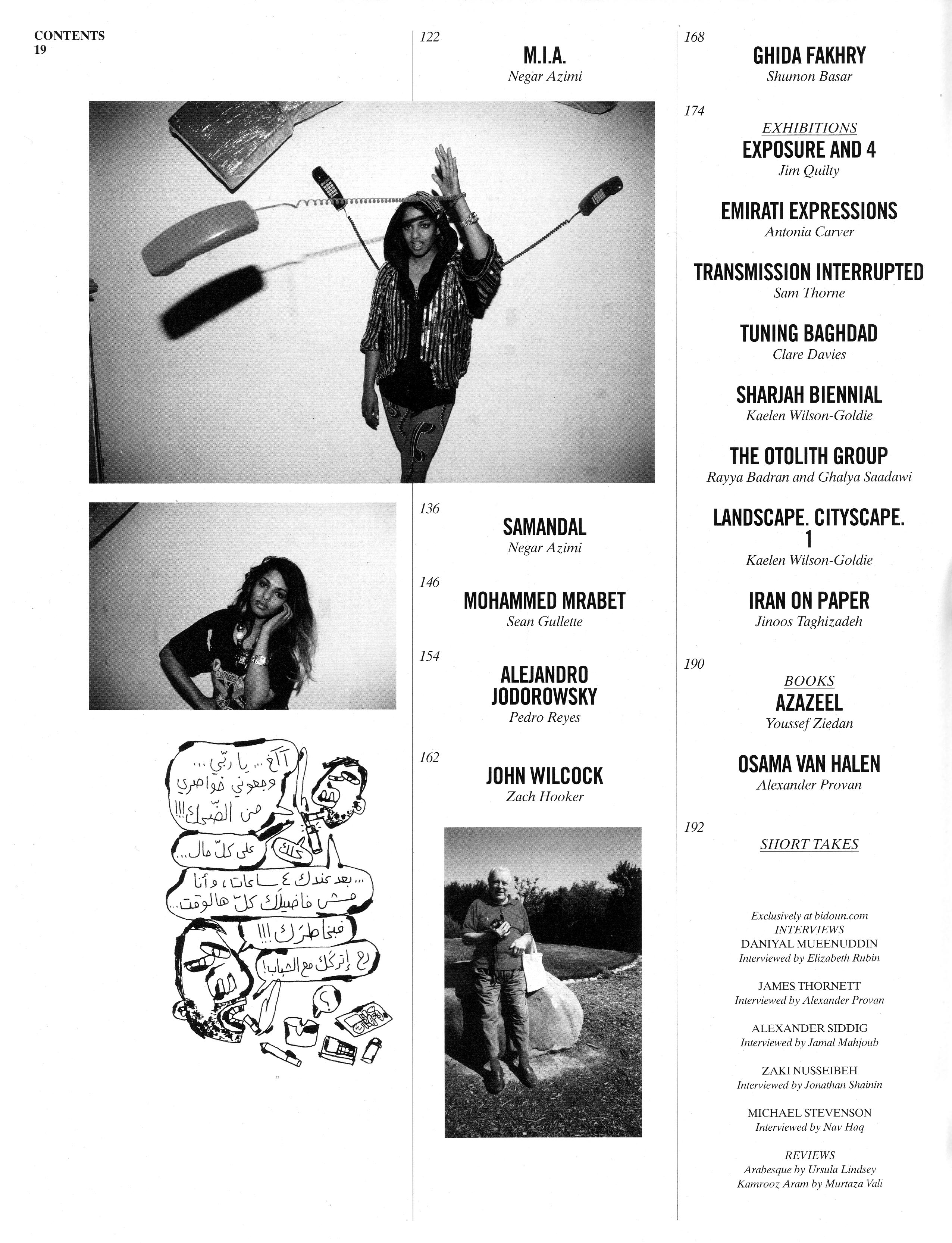
Meanwhile I’m posting some scans, including of Bidoun’s Contents page because it has so much in it that I really think you should buy a copy and/or subscribe.

Deeply Baghdadi

MOHAMED MAKIYA INTERVIEWED BY GUY MANNES-ABBOTT

07.09. from holbein to ford madox ford via zizek

In July an essay of mine appeared in Ford Madox Ford and Visual Culture (Mar2018 out of stock), edited by Laura Colombino [Rodopi, Amsterdam/New York]. It’s the 8th volume in a wider series dedicated to Ford, the series editor for which is his critical biographer, Max Saunders.

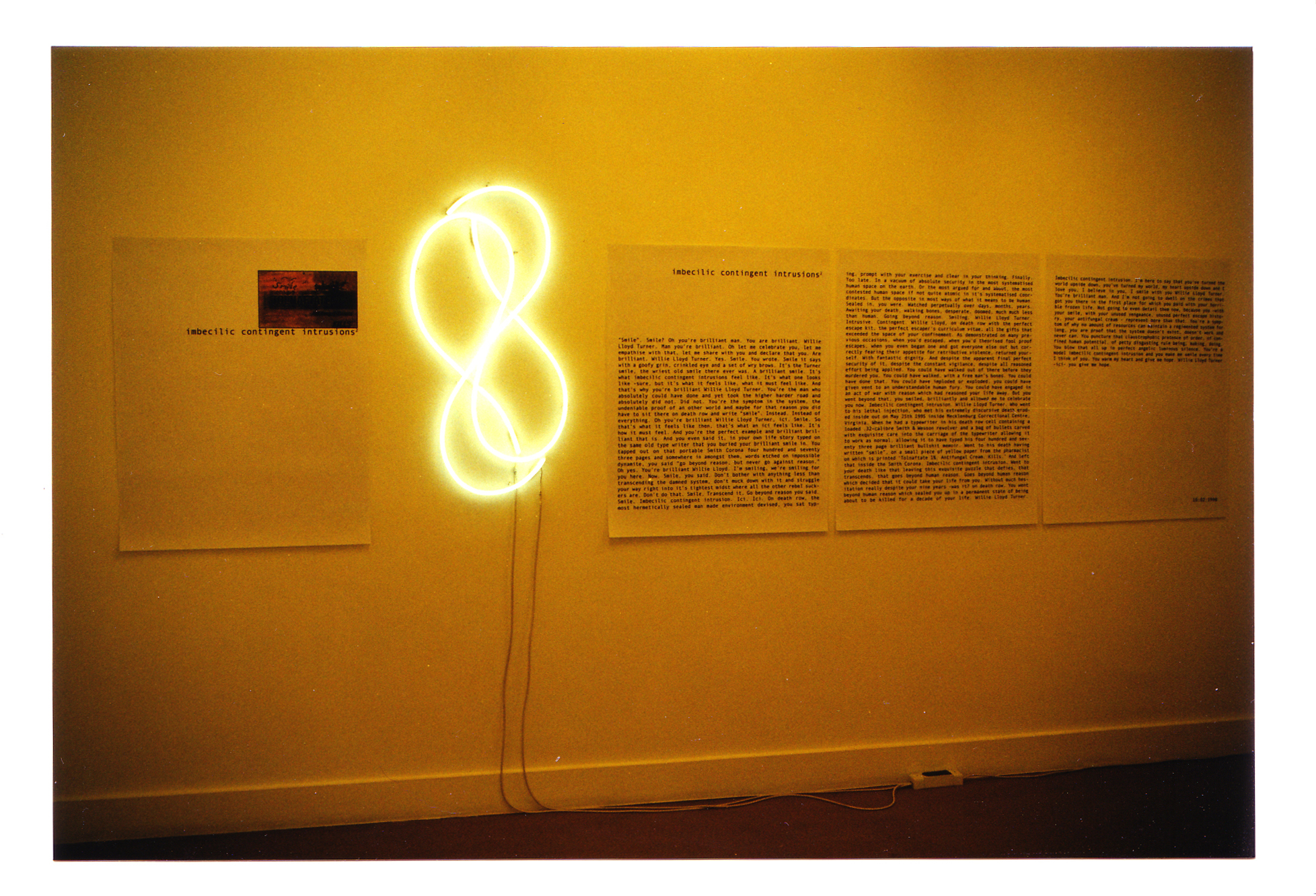
FMF & VC is a pricey scholarly volume for which an abstract of my contribution was required and included below. It meant revisiting Slavoj Zizek’s phrase “imbecilic contingent intrusions” which I borrowed for a subseries of e.things. ici2 remains a favourite of my own and is archived in my old website, as is its exhibition with Cerith Wyn Evans’ ‘Mobius Strip’ at Robert Prime, London.

Ford wrote his books on London and Holbein in a hurry but I’ve long admired The Soul of London (Mar2018 Also no longer available, this links to archive.org) and valued his Hans Holbein the Younger as much for what it reveals about Ford as about his declared subject. In ‘Fording Holbein’ in FMF & VC, Martin Stannard [whose well-judged, fond and economically rendered biography of Muriel Spark appeared in 09] defends Ford’s Holbein as “a crucial statement about  his conception of history and aesthetics” and “the forge” of ideas later embodied in The Good Soldier and Parade’s End. “The thumbprint of his nascent impressionism and modernism is left in the paint of this portrait of a world both ancient and immediately contemporary.”

ABSTRACT

Skull/Brain Drain Stain [The Ambassadors]

by Guy Mannes-Abbott

Ford identified Holbein as ‘the first painter of modern life’. This essay argues that Holbein’s painting of The Ambassadors exemplifies what Ford meant by such a claim. Holbein’s courtly ‘display’ portrait is a quintessentially Fordian rendering of the human in all its messy actuality, despite Ford’s disclaimers about it. Holbein’s famous painting is now routinely looked at awry, but this essay faces it hard on to explore its peculiarly potent instability. In particular, it focuses on the skull and its associated contents; the brain, stain or spillage, human mess and matter in the foreground of the painting. It’s this vomiting up of the real that Ford finds and celebrates in Holbein – and beyond in the ‘modern life of men and cities’. With reference to Mark Cousin’s notion of the ‘ugly object’ and Slavoj Zizek’s ‘imbecilic contingent intrusions’, the essay suggests that Holbein’s portrait achieves vitality, individuality and distinction through its potential negation: the profaning blob. Holbein’s rendering of abysmal human actuality enacts Ford’s critical Impressionism which, he wrote, exists to ‘render those queer effects of real life’. In the second part of the essay, the effects of life’s contingency are extended to the city of London, images of war and leisure, and situated by what Zizek describes as the ultimate ‘speculative mystery’. Just as Ford celebrates Holbein’s vulgarity for its ‘blood’ and ‘hope’, the essay finds philosophical potency in his pukey mass.

06.09. from elias khoury a novel voice

Elias Khoury is a venerable Beiruti. His latest novel in English, Yalo, appeared in two separate translations in the same year; odd given the English-speaking world’s pitiful record in translating from Arabic. In June I reviewed the British Yalo for The Independent, and have posted the short text below. I also interviewed Khoury around publication of Gate of the Sun [Bab al-Shams] in 2005, a first which appeared in The Independent too [see Archipelago Books’ resourceful author pages]. These are notably good as well as important works of fiction which give rare voice to the actual terrors of our world and times; we should have all his work, especially his critical essays, in English.

Screenshot 2018-03-12 10.30.56

Yalo, by Elias Khoury

by Guy Mannes-Abbott

Elias Khoury’s 11th novel starts in the middle of a series of forced confessions, which spiral in unending variation until the eponymous Yalo concludes that “no one can write life”. Yalo is a thief and rapist, a security guard turned “hunter” in the forested hills above Beirut. Not only has he inverted his job, but he’s fallen in love with one of his victims. The novel begins as Shireen denounces Yalo before his interrogators, setting in motion his desperate attempts at “singing” his story.

Khoury has described how he starts each novel in the middle of the story. In the middle of his last novel, Gate of the Sun, he wrote that words and language have been circular from the first; “No matter how hard we try to break its circles, we find ourselves falling into new ones.” Yalo exemplifies this in ways that may appear dispiriting in a confessional novel but are mesmerising in their execution -as readers of Gate know.

Daniel Jalao/Habeel Abyad, aka Yalo, is a 30-year-old Assyrian and veteran of 10 years’ fighting in Lebanon’s civil war of the 1980s. As he circles back through his lives, Yalo revisits those years as a war-dog in that many-sided conflict. Finally sickening of it, he accompanies a friend to Paris after robbing the safe at their barracks, only to be left alone and begging at Montparnasse métro station. He’s rescued from destitution by a Lebanese arms dealer who needs a guard.

“We are a people whose story has been rubbed out.”

Yalo’s grandfather was a refugee from Ottoman massacres of Assyrians. He looms in a mystical guise throughout the novel as patriarch and priest of the Syriac Orthodox Christian Church in Beirut. When Yalo heads for Paris, his grandfather counsels that “emigration killed a man’s soul”. This is why he had “learned to read what had been erased”, he says. “We are a people whose story has been rubbed out.”

Yalo the disaffected fugitive is part Everyman, part Lebanese Underground Man, and part the refugee as coming global citizen.

Yalo’s difficulty with words; his smattering of a “dead” Syriac tongue; his ambivalence towards Arabic and struggle to narrate, begin here. Khoury leads us towards his displacement brilliantly, but it’s only one of the big ideas to which he gives vivid life. Yalo the disaffected fugitive is part Everyman, part Lebanese Underground Man, and part the refugee as coming global citizen. Altogether he’s a brilliantly individuated character who, despite constantly shifting versions and ecstatic visions of himself, is as urgently affecting as the brutal torture techniques recreated here with scrupulous exactitude.

For every fracture and fragment there is a riffing repetition and return which accumulates force

Yalo succeeds in capturing the equivocity of things while it also bristles and breaths with unmistakable authenticity. The key to Khoury’s writing is its rhythmic and arrhythmic repetitions; from scales that are formal and philosophical through events, memories and sentences to words themselves, which can constellate across whole pages. For every fracture and fragment there is a riffing repetition and return which accumulates force until this exasperatingly unsympathetic man steps right out of the book and you want to offer him a chair at your table.

This novel is about a corrupted individual in a corrupting time, but it speaks of and to us all.

Yalo is a highly compelling performance, presented in beautifully crafted, often lilting prose, a tribute to Khoury’s authorship in Arabic as well as to Humphrey Davies’ translation. This novel is about a corrupted individual in a corrupting time, but it speaks of and to us all.

MACLEHOSE PRESS, £17.99. ORDER FOR £16.19 (FREE P&P) FROM THE INDEPENDENT BOOKSHOP: 08430 600 030

05.09. from me to roni horn, back and back again

Roni Horn’s retrospective began at Tate Modern before travelling westwards. I found myself going again and again, spending minutes and sometimes hours there, wishing it were a permanent fixture in London. I needed to write something and in the end the only way I could find the words for it was in the form of an e.thing.

Were 4, 2002 Roni Horn

still [two]

I went to see the Roni Horn again today. Before it goes, before it ends. And it was still there. Still. It was still, there, and that’s why I wanted to go again. To see the stillness and be amongst it; have the experience in my day and life. This particular stillness. And I did and it was and they were. All four of the Weres are still there, causing me to marvel again. In the stillness. All too precisely embodying what Roni admires and retrieves from Emily Dickinson’s singular wordings. A writing that doesn’t take you anywhere but confirms, insists upon, reveals and so celebrates the here, now, what is. Here, in the stillness. In the stillness of it all. This is what Roni does; what the Weres do. What they did, very precisely this. They require my presence in order to send me away with my hereness affirmed, confirmed. Sure that I know where it is, what it is, that it is. Once again. In the stillness of it all. So I went again today, for the sixth time. Perhaps the seventh. And the Weres are still there, though not for long. And they still stilled me. It’s astonishing this; round and around, again and again. And still, every time. In the stillness of it all they deliver up my self in its here and now. Contingent, incomplete, durable. Here, now. Present, still, in silent dialogue. A confirmation that I am, in the nothing that is. So what will happen when the Weres are gone? Never to be seen in destructive daylight again. Where will the stillness go? Will it still exist? In the stillness of it all, what is? Roni loves, gives and attends to me now; enraptures, engages, entices, embraces whoever I bring to the page. Specifically; the paper. In the stillness of it all. What is? In the stillness the paper moves; bowing, buckling; going somewhere and nowhere. So moving? In the stillness, I’m struck wordless; dumb. Entrapped in abstract seduction; a non-delivery of the very something I need and desire. Iterations of my stillness, my here and there, my continuing to be. Were 4. Were 11 and 12, even lime green and stubbed-on 13, but not these alone. I can’t keep away from their complex, frenetic, screeching silent stillness. And that wrestling; the sheer abysmal press and perfected stilling of all the movement in me. A movement towards stillness, draws me back, still. In the stillness of it all what is so moving about? Moving about. Still. There, but not for long; soon the Weres will be gone. They will be ex-Weres and my claim to keep them all still in my mind -indelible, unforgettable- tested. It won’t be long before I doubt my memory, undermine the necessity that has moved me to return so often this spring as it sliced up early summer and rearranged itself. I won’t believe it. The stillness, the goneness will defeat me. I know I’ll need to return again and the stillness won’t be there. It will be memory, remembrance, something else. Unstill, staged. Something which annuls it all, takes away the stillness, obscures, even destroys it. Memory. Destroys. Stillness. Without being able to go to the battleground it’s returned to wishful desire, to less than the nothing it so brilliantly enacts. In my presence, stilled, in the stillness. It’s a question that will survive the Weres -when they’re gone. Roni so precisely offers up the stilling of a particular busy stillness that when it’s gone, when she’s gone, when she’s removed the Musts, Theres, Throughs and Weres -all of Emily’s metaphysics of prairie and bee- I’ll be left asking the question. About the still. The stillness. The stilled. In the stillness of it all, what is so moving about?

18.v.2009

04.09. from bourse to dhow in 1039 seconds

Sir Thomas Gresham introduced the idea of a bourse -or exchange- to London from Antwerp and bequeathed the City an eponymous College; site of Tower 42 [old Nat West Tower]. Founded in 1597 it was teaching astronomy at the same time as Johannes Kepler’s astronomical speculation helped generate his mother’s trial for witchcraft.

Alexander Kluge* described how ‘KEPLER SAVES HIS MOTHER, THE WITCH’ in The Devil’s Blind Spot [pp14-5]. Kluge’s definition of this perceptual sleight is; “Between the Devil’s attempt to test the witch’s or half-witch’s devotion to evil, and the temptation to show his omnipotence, there exists a tiny gap, a little blind spot.” [pp12-14] Within the old City walls there are many potent sites like this, which I conjured with on regular night walks during 2007-08 in particular…

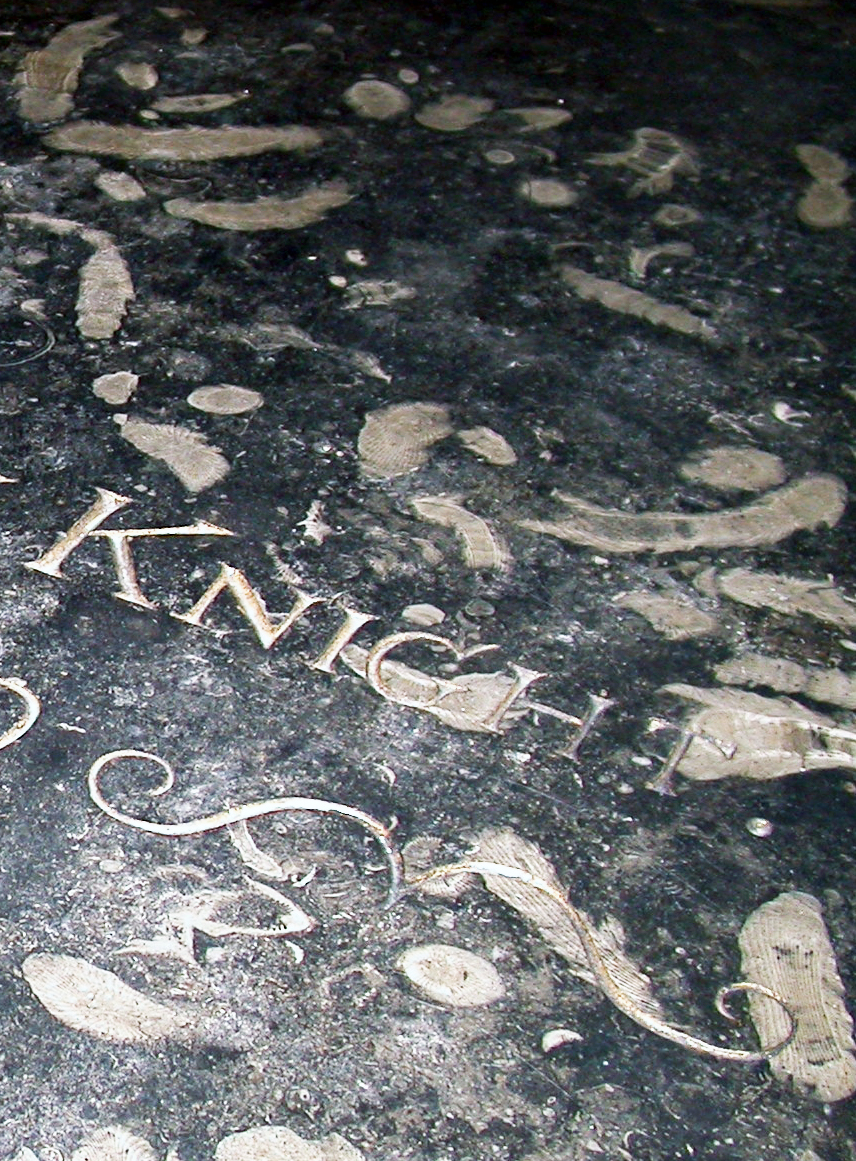
Gresham’s tomb, with its peculiar grasshopper-like spirits captured in the black marble, looms at the narrative pivot of a novel that I began -on the the day of the crash, September 08, by chance- in the newly acquired fruit store. The scene where these little spirits cause a terrifying argument takes place in the massive belly of a half -built teak dhow, baking on mudflats on the edge of the Arabian Sea.

In April I began to send 1039 seconds to a handful or so readers for comment while I put it aside over summer before attempting final drafts. For it to work the novel must establish a particular measure -that of walking with a young child in and around Stockholm as well as walking in 45 degree heat on the edge of desert- as it weaves between a refuge in a Viking bay on the Baltic and an ancient pirate’s port on the Arabian sea. Such a measure is conventionally considered ‘slow’, especially early in a novel, but real readers are not bound by convention -are you?

1039 seconds ‘speeds up’ as it’s sucked into the turbulence of our times; ‘the world as it is’. There’s even a clue in the title which is the time it takes for the narrator’s explicitly happy world to explode with changes that never stop. Still, I’m relieved by the reports of avid reading volunteered over coming weeks and their celebratory use of the word “unusual”. Quietly, I’m ‘sure’ that once this post-apocalyptic world -rendered recognisably personal and unfolding in the present rather than a convenient future- has established itself, sheer unpredictability ignites the remaining chapters.

And so it seems, but more of this later…

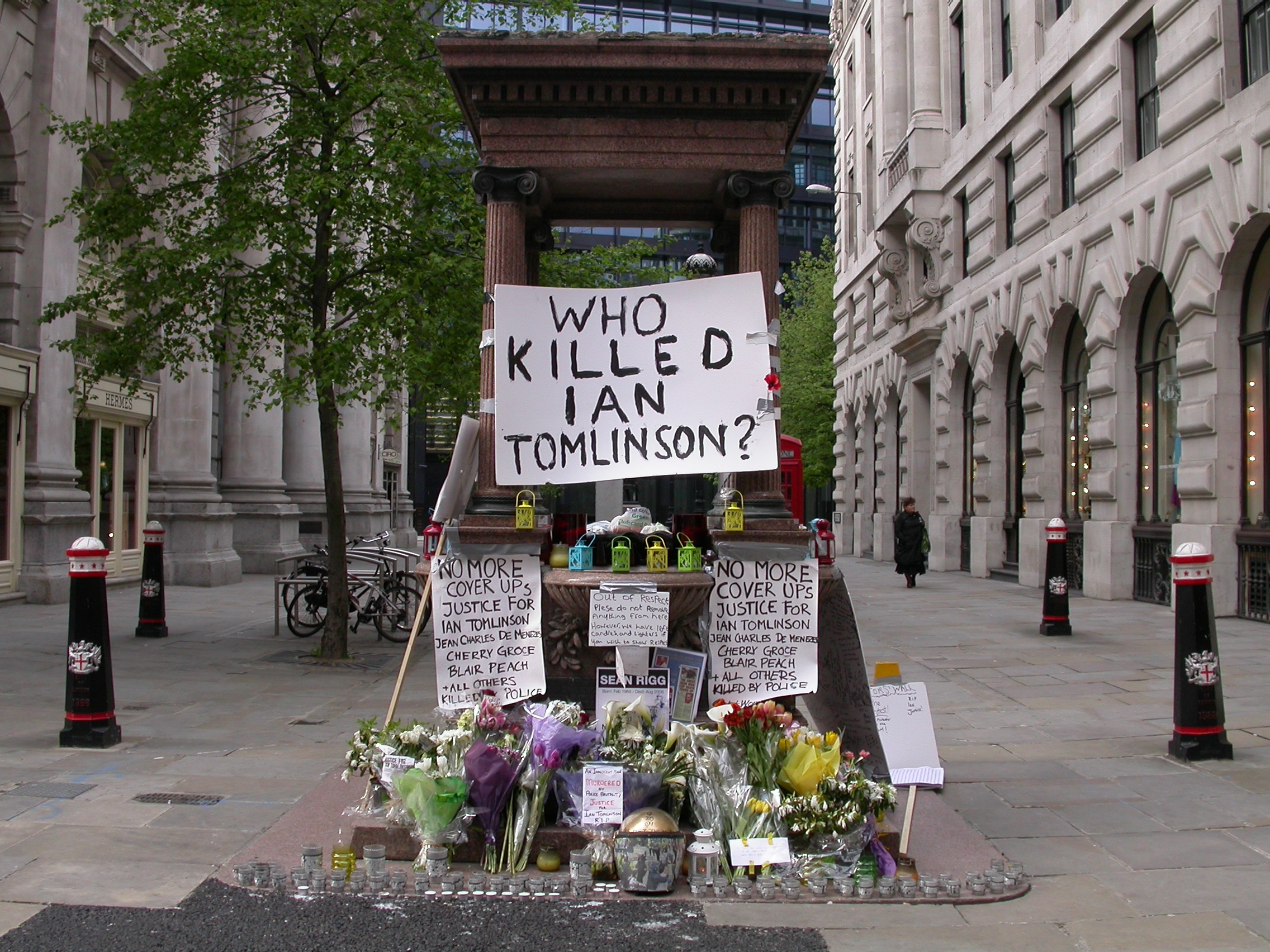
On April 1st 09 Ian Tomlinson died after being attacked on film by uniformed policemen over-reacting to G20 protests taking place around Gresham’s bourse; the Royal Exchange opposite the Bank of England. I took this photograph of a memorial set up for him in the shadows of another of Gresham’s grasshoppers [high above his bourse, to the left here] by friends and admirers in the immediate aftermath.

AK’s writing is scattergun, worth it for the hits. AK’s own site is here. His English-language publishers, the very great New Directions, have a page for Cinema Stories from 2007 here but nothing for The Devils Blind Spot from 2004. OCTOBER 46 [Fall 1988] was dedicated to AK, and contains a notable interview with him. Otherwise check his interview of Thomas Demand, published fully here, which is excellent. The great Ubuweb have a selection of his short films here. There is a huge box set of films here. Etc.

03.09. archiving the future; from doshi to makiya

In March I was asked to interview Mohamed Makiya, the great Iraqi architect of the modern period, for Bidoun magazine’s Summer Issue. There were many reasons to agree and I spent most of the month with Makiya, his work and his words, our conversations eventually being reduced to a 3-4000 word piece published in August 09.

Throughout I was reminded of Balkrishna Doshi, another great architect of the modern period who remains under-appreciated beyond the ‘warm world’. In 2002-03 I spent a significant amount of time with Doshi [in Ahmedabad, Gujarat] his work and words and have written about him in my forthcoming book about India’s most interesting state; A Gram of Gujarat.

It took many mentions of Doshi’s name before Makiya -now in his mid-90s- picked up on it, his hearing not as sharp as his mind.

MM ‘Ooh he’s a friend of mine! Yes!! [laughs very happily] He’s the best man, he was a very close friend, I supported him in every way. He produced a project with Corbusier I think at that time [late 1950s in Paris and Chandigarh but most significantly Ahmedabad -vanguard of Indian modernity]. But he’s one of my very close friends, who believes in my ideas. Amazing that you mention him! To me he’s a school of thought and he knows what I think of him …’

GMA Forgive me, but I think Doshi is a better architect than Charles Correa [MM had mentioned CC to me before, also with affectionate respect].

MM ‘Yes! of course, oh yes [laughs] … Yes, Doshi is a different scale.

GMA I think you and he-

MM Yes, Doshi is … a copy of me, more or less, in feeling, funny you mention him! How did you know him? He is the closest architect to me!’

This closeness is real enough and took me back to a conversation with Doshi at Sangath, his remarkable office built partly below ground on the outskirts of Ahmedabad. We were trying to invent a term for his architecture’s unique solution of the deeply indigenous with the subcontinent’s historical syncretism [he often compares Ahmedabad’s labyrinthine old city to Baghdad’s bazaars, for example] and the urgently -sexily/sleekly/intelligently- contemporary. An impossible challenge, but any such term would also describe the work of the “deeply Baghdadi” Makiya.

Both of these giant global figures are sophisticated architectural innovators who cite trees for inspiration. Doshi enjoys paradoxical upside-downs and inside-outs, continuities and cosmology. Makiya describes the Iraqi palm as a perfectly structured dwelling, a “blessing from God”. With both, I’ve found myself archiving the future as the world turns and our new century re-orientates us all to the East again. It’s a notion that anyone familiar with or influenced by their work understands instinctively.

Neither MM nor I were aware of a documentary film being made about Doshi last year. For more information check its makers’ lovely blog which includes stills, clips and promise of a dvd. The figure that Doshi cuts in the clips below is familiar to me; notably articulate about his work and world, great riffs! -and can be researched through his office website here. There are two well illustrated books on Doshi -now in his mid-80s- from the end of the 20th Century. The best of them is by William JR Curtis; BD An Architecture for India, Rizzoli NY 1988. However, it’s out of print, a quarter of a century out of date and requires a follow-on volume to begin to do Doshi justice.

I’m linking to 2 clips made a couple of years apart, which only slightly overlap. The first [on Vimeo] is the more recent, includes Graham Morrison [Allies and Morrison] and footage towards the end of the stunning complex at Sarkhej -a 15th Century legacy of the Sultan of Gujarat- one of Doshi’s inspirations. The second includes Yatin Pandya and Rajeev Kathpalia, and footage of the Gufa/cave-like structure which Doshi designed for the great charismatic artist [Maqbool Fida] Hussain, now in exile. In both, Doshi speaks from inside his own office at Sangath, hands resting on a table that is level with the ground outside.

Doshi from Premjit Ramachandran on Vimeo.

02.09. angus fairhurst retrospective; back to the future

When Tom Trevor presented a retrospective of the willfully wide ranging works of the late Angus Fairhurst at the ‘new’ Arnolfini in Bristol I expected much journalistic mythologising as well as critical celebration or at least engagement. Aside from the curator’s herald and despite the publication of a first monograph to accompany the show, Angus -a quintessentially English radical of the visual arts- remains woefully under-recognised and his work awaits critical ‘rediscovery’ at some predictably safe distance of time.

Anticipating the wake-like opening and its celebratory aftermath I arrived early enough to spend an hour alone in the galleries. Back home, laid up with a torn calf muscle in the first snowy days of February 09, I was moved to a first and wrote this conventional review of the show. I submitted it to ‘a national newspaper’ who said they had it covered, failing to mention what the reviewer had covered it with.

I’m posting my piece as it was; a first modest attempt at some of the truth…

AngusFairhurstAtArnolfiniGuide2009

Done.

By Guy Mannes-Abbott

In life, Angus Fairhurst was casually misrepresented as a kind of avant-garde jester in the YBA pack. The error was symptomatic of a nagging lack of recognition before his very public suicide on March 29th 2008. A joke requires a punch line to satisfy commonsensical and Freudian definitions. This first Retrospective at Bristol’s Arnolfini bristles with Fairhurst’s witty resistance to formulaic closure and clarifies a very particular seriousness of purpose.

The Arnolfini has drawn together a show full both in its formal range; paint, sculpture, film, photography, pencil drawing, sound and collage, and the sheer strength of the work across several galleries. From this fullness, and for the first time, a narrative emerges to what was a very disparate, narrative-defying practice. All retrospectives leave things out. Here, much of the earliest work is missing. So let me demonstrate how one notable absence, a photograph called Man Abandoned by Colour [1992], rehearses much of this exhibition’s ‘story’.
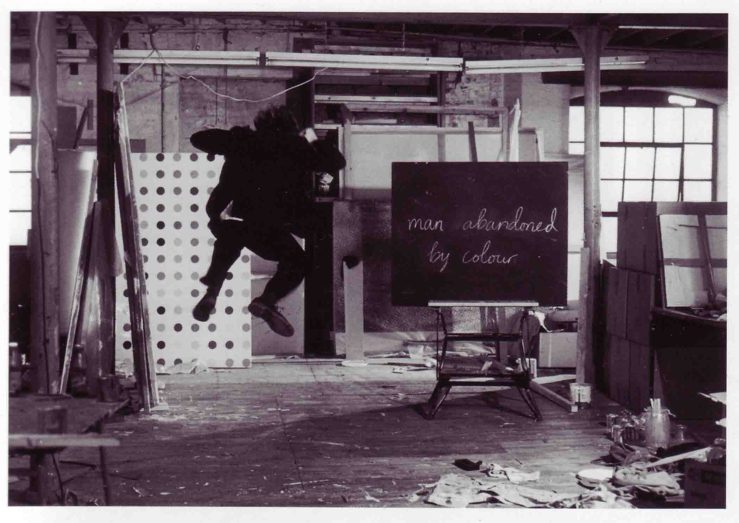
Man Abandoned by Colour 1992 Angus Fairhurst

Man Abandoned shows the artist, back to camera, jumping like an ape beside a free standing blackboard on which the title is written in Magritte’s hand [from The Treachery of Images]. Hints of silent-era comedy compete with art historical reference and a foregrounding of ‘background’; the slightly abject studio stacked with work. This particular studio was shared with Damien Hirst; an early spot painting leans behind an iron pillar and ladder. So there you have Angus Fairhurst. Except that there’s more: the building and artist are gone, that ‘background’ has become art historical, the image has gained new dimensions. Between this and Fairhurst’s final series of paintings is a paradigm shift and circular arc: a spiralling of potential.

This exhibition begins and ends with Undone [2004]; a large bronze banana, skinless, black-painted, “edition one of three”. Upstairs is a latex banana skin, along with massive bronze gorillas and mirroring water-holes, gorilla suits and a performance video of the artist shedding it, as well as fine drawings of Fairhurst encountering himself, the self, and subjectivity itself, via the ape. I’ve long been indifferent to the sculptures, whose ‘point’ is optimised in cartoon drawings on paper, but here they earn their place. Even the primary-colour wall paper overprinting of wintery forests, also from In-a-Gadda-da-Vida [group show with Hirst and Sarah Lucas at the Tate in 2004], gains from this context. Images of a tree bared of, and potential with, life recur in collages and paintings right up to a final chilling sculptural relic; Lessons in Darkness [2008].

Fairhurst’s radically suggestive collages are central to this show and his achievement. His earliest works blew up printed images until their coloured dots became unreadable. Here, collages of billboard posters import a recognisable urban scale then explode with dimensional depth and multitudes. Look closely at them and you find a Blue Peter, art-for-all aesthetic at work; cheap materials and great simplicity turned to lasting effect. Take Billboard, Everything but the Outline Blacked-In [2003]; a naked Sophie Dahl reclining in the famous ad for Opium perfume. Look closely at the figure shrouded in black paint and you appreciate the distinction between a gesture of blacking-out and Fairhurst’s exquisite blacking-in. Now the model’s outline, created by brushstrokes, resembles solar light on the horizon, old-for-new days.

Elsewhere are many small collages of magazine pages or posters, their words, figures, and subjective space, removed, cut-out and layered. Apparent simplicity of intent is enriched, again, by manifest precision. On larger works like Seven billboards [2004] these carved masses build like paint on a late Lucien Freud canvas. Incisions open on other rooms, days and vistas through spectacular space towards a speculative architecture of our time. In the 19th Century, modern ‘man’ descended into crowds, today that ‘crowd’ runs through us just as it does through these cut-outs or, more exactly, cut-ins of our promiscuous hyper-space.

Through these portals we arrive at Fairhurst’s most lasting achievement; the series of paintings begun in 2007 and shown at Sadie Coles’ gallery in 2008. It was on the last day of that exhibition that Fairhurst made his very considered final act. Inevitably it threatens to cast a romantic, mythologising light on these last works, but they don’t need help of that kind.

Fairhurst’s earliest work adopted Eva Hesse’s clothes tags to insert into and screen out his or Hirst’s canvases and cabinets. He was still bewitched by her titling into the mid-noughties, fretting over word chains; Unwork, Unseen, Unwit etc. These final works are a departure even at the level of their titling; Schopfun, Epha, Eenp, Gree. The latter three are half a metre square, some of the smallest works on show. Schopfun is a more transitional work, a larger canvas combining collage with paint rendered by hand and silkscreen. Like Epha, it’s a close up, centring on a painting-in of the kind of models he removed from advertising. Here figures are highly ambiguous; on display and not.
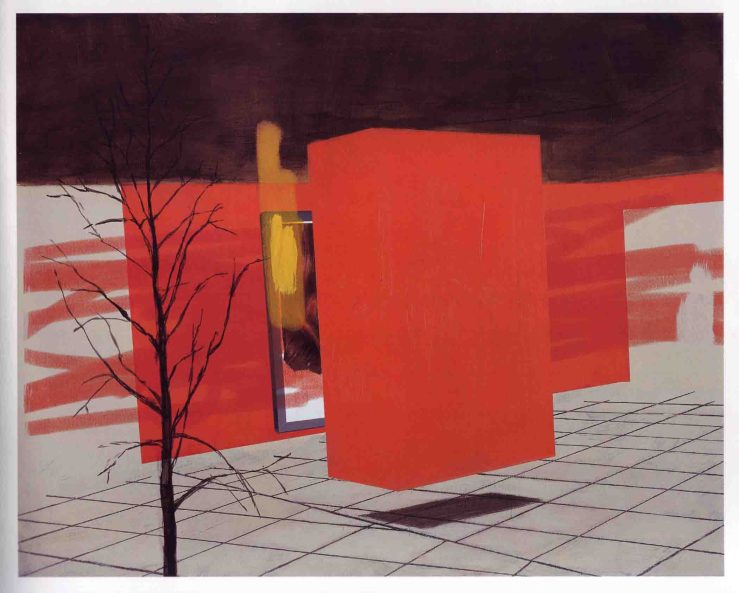
Eenp 2008 Angus Fairhurst

Yet it’s Eenp and Gree that make the starkest claim on our attention, I think. Much of Fairhurst’s work is condensed in these paintings, not least that photograph; Man Abandoned by Colour. There is warm colour here but nothing seductive about these canvases. There is no way out of them. Nowhere to be if you find your way in. They render a no-place, in which recognisable gallery or domestic walls float impossibly above broken grids of flooring, perspectives laid down and lost. One immediate association is with the interiors of David Lynch’s recent films; spaces in time, contingent, truly uncanny. On one wall an image hangs, partially obliterated by marks within and without the frame -of that image and the potential ‘built space’. Marks overwritten by computer-originated spraying-out which resembles graffiti; a form of spraying-in. Here Fairhurst renders a generative threshold: within and without, interior and exterior, place and no-place, being and not.

Gree 2008 Angus Fairhurst

Eenp contains a tree, growing into the image, massive pillars float high in it beneath cosmological space. Gree contains an image, or smudged figure, painted out in the hand of Francis Bacon. It’s another art historical reference, half obliterated, and to an artist collected, incidentally, by Damien Hirst. A spiral of light years links Gree to Man Abandoned by Colour. These final paintings engage what Giorgio Agamben means by radical potential. Far removed from the “heroic pathos of negation”, with these works Fairhurst was “dwelling in the abyss of potentiality”.

So there is pleasure and satisfaction in this retrospective despite its tragic lure. These potent, difficult, mesmerising, abysmal, yes, as well as bleakly solitary last works celebrate making, creation, art. Angus Fairhurst had reached a significant stage in his work and as an artist. In life he often practised sleights of hand dressed as consumable art-gestures. In death his art subverts all such gestures with its resonant singularity. This is work that speaks clearly to us and though we may not listen, even now, we will remember it.

01.09. from gaza to mourid barghouti

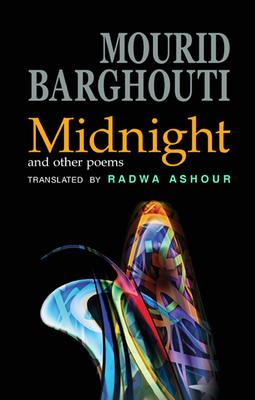
I’m linking to a six-part blog I wrote for English PEN around the publication in December 08 of Mourid Barghouti’s Midnight & Other Poems, to which I contributed a substantial introduction [you can read it here.]

Midnight is available from ‘all good bookshops’ as well as its publisher whose resourceful pages begin here. A properly weighty review of Midnight by Boyd Tonkin of The Independent appeared in January 09.

Mourid Barghouti’s excellent website is here. His classic memoir I Saw Ramallah is widely available, not least from its UK publisher whose site also contains an extract which demonstrates how essential, tough-minded and exquisite it is. A sequel appeared in Arabic in 09 [with a title that translates as; I Was Born There, I Was Born Here] and is on its way into English.

The Bombing and the Brink

by Guy Mannes-Abbott [with thanks to Sophie Mayer and English PEN World Atlas.]

Part I, Part II, Part III, Part IV, Part V and Part VI -which includes a link to the whole piece.

Words did not and cannot defend displaced and besieged civilian populations against the use of white phosphorus, for example, but they can and should undermine attempts to justify or deny that use and, most critically, hold its users to account.