settlements app, the actuality is significantly worse

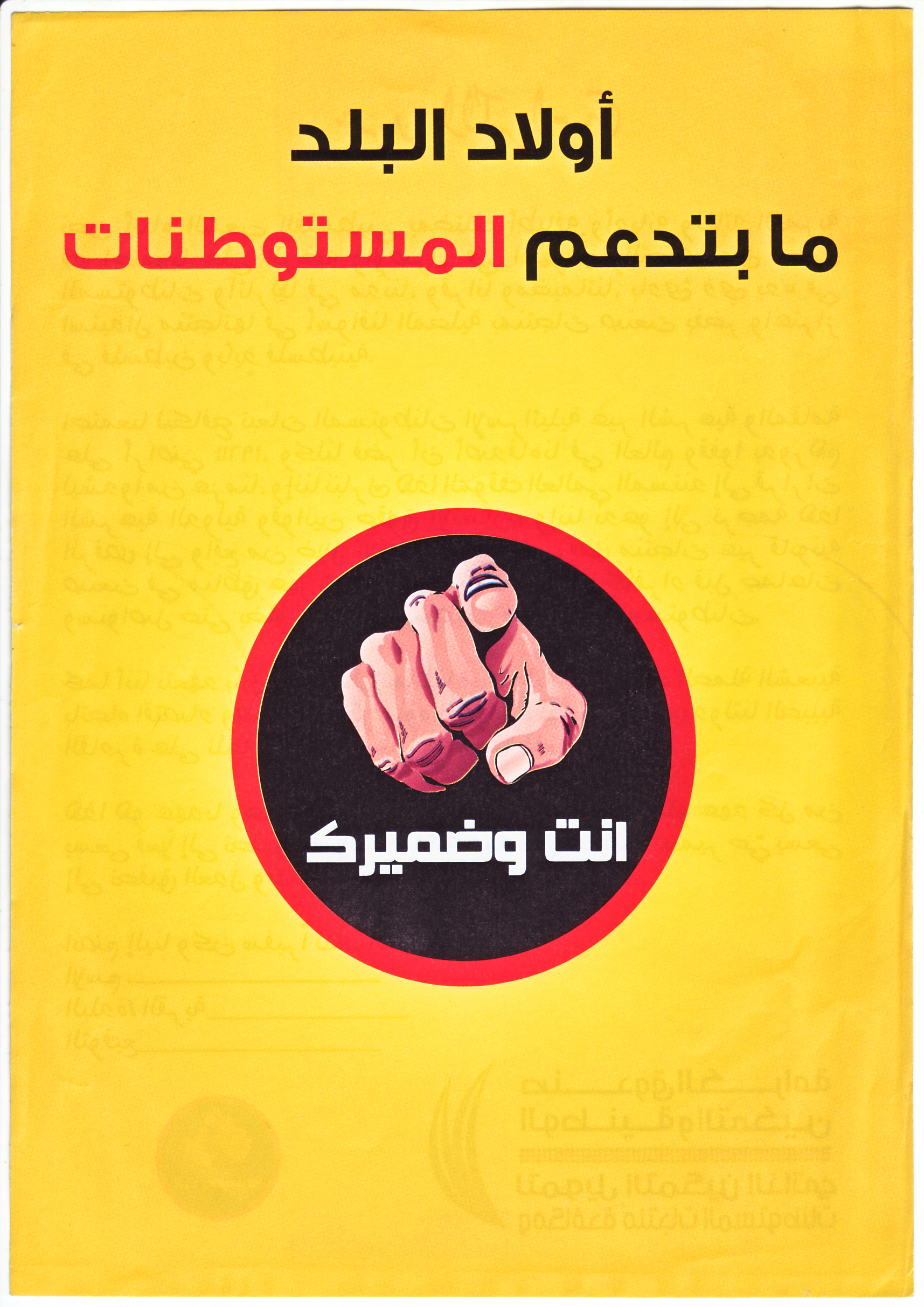
The Guardian reports [here] on the launch by American Friends of Peace of an app -Facts on the Ground- designed to keep the shameless growth of illegal settlements to hand. The idea is that, just as with previous historical examples of massive or sustained crimes against humanity, you can’t say you didn’t know. [Re; imminent end of temporary freeze, expect another shorter one with various exclusions -and renewed slaughter somewhere or other- by the masters of exceptionalism. Or out and out resumption of same. They won’t actually stop, they will have to be stopped, actually.]

iPhone Screenshot 1

So it’s very welcome; you can check the number of illegal settlers of a hyper-nationalist or -religious persuasion and how much of the settlement is classified as “private Palestinian land” just as easily as you can check how many Boris Bikes are at each stop. My only complaint is that even with this to hand the actuality is underplayed. How do I know? Because I’ve walked around these very settlements, onto overlooking hills and photographed them only this summer. I’ve witnessed the actuality and know the truth. Just as every Palestinian imprisoned in the otherwise gorgeous hills knows -something you might ponder.

Continue reading “settlements app, the actuality is significantly worse”
the great game, raouf haj yihya in liverpool

If you can’t get to Liverpool for the current Biennial [18th September-28th November 2010], and especially to the Future Movements Jerusalem section of the City States show at the Contemporary Urban Centre [curated by Samar Martha], then at least you can sample one of the art works here [Press image to play, it takes a few seconds to load].

Continue reading “the great game, raouf haj yihya in liverpool”

mourid barghouti, i was born there, i was born here

ولدت هناك، ولدت هنا   مريد البرغوثي

This is the front cover of my very own copy of Mourid Barghouti’s latest book I was Born There, I was Born Here, published by Riad El-Rayyes Books in May 2009. In Nablus you can pick up a cheaper pirate copy, but this one is the original with an embossed cover from Dar al Shourouk in Ramallah again.

I excuse my own excitement because I remember when Mourid first mentioned that he was writing this and have been waiting impatiently for its account of the period post 1996 when he was first able to return home -as recounted in the classic I Saw Ramallah- all the way up to and beyond the 2006 elections.

At this stage my Arabic makes reading this very slow work indeed, so I’m glad that Humphrey Davies has been appointed translator of the book and that the American University of Cairo Press [AUC] are scheduling the English translation for November 2011. I know that Bloomsbury were anticipating publishing the book in the UK and will update on both fronts when I receive confirmations. [Yes! Fall 2011 is the scheduled publication date for both.]

Meanwhile, there’s an intriguing 2000-word blog on the book, a first English language review including quite extensive translated passages, here, which I recommend to you.

Finally, given the familial dimension of this book -Mourid visits the alleys and suqs of al Qds/Jerusalem as well as the village of his young life Deir Ghassanah with son and poet Tamim- I can’t resist sharing my pleasure at seeing that novelist, academic, wife and mother Radwa Ashour has a newly translated novel, Spectres [Atyaf], forthcoming from Arabia Books [UK], who have a page here. I hope this will mark the beginning of good translations of all her works into English. In any case the arrival of this one is a major event.

Riad El-Rayyes Books [Arabic] website is here.

AUC Press is here.

Arabia Books here.

Nur Elmessiri article on Radwa’s Atyaf/Spectres in Al Ahram [1999] here.

My earlier post on Mourid’s Midnight and Other Poems, which Radwa translated -and for which I wrote the Introduction– is here.

‘Mourid and Tamim Barghouti with Ahdaf Soueif’ event at the Southbank Centre London, Saturday November 6th is here.

on not meeting edward said, who was right then and is right now

I enjoy unlikeliness and it seemed unlikely to me that Candia McWilliam would find herself in Edward Said’s memoir of his early life; Out of Place: A Memoir [Granta 1999]. That she does so in her own memoir [What to Look for in Winter: A Memoir in Blindness Cape 2010/Vintage 2011] is one of many endearing things about it and its author. Also a high recommendation for Said and his own memoir.

I spent a number of mornings in June this year running past one end of Edward Sa’id Street in Ramallah, actualising the way he and his work feature near the beginning of my adult life and have been returned to repeatedly ever since. I’m posting an old review I did for The Independent of his collection of pieces The End of the Peace Process: Oslo and after [Granta 1999 -out of print/PenguinRandomHouseUS 2001 -linked] [BELOW]. Read almost anything of Said’s [especially on the question of Palestine] and the absence of a voice like his today makes you weep.

Continue reading “on not meeting edward said, who was right then and is right now”

kanafani’s rijal fii al shams/men in the sun, a celebration

I’m just celebrating my acquisition of the book in Arabic from the huge and richly stocked Dar al Shourouk -which is nicely complemented by the small and richly stocked al Jameat- in Ramallah. Since posting on Kanafani I want y’all to know that search engines connect someone to that page every day, which suggests a significant market for the book.

I’m pleased to see that Arabia Books have just re-issued Emile Habiby’s The Secret Life of Saeed the Pessoptimist and have a page on it here. (Updated Mar 2018) With the warmest respect to Kanafani’s publisher in Colorado [in English] and in Nicosia [Arabic] I do wish there were a UK edition…

Meanwhile Men in the Sun is available from UK distributors here.

Dar al Shourouk’s Arabic website is here and they can be contacted at shorokpr [at] palnet [dot] com

Al Jameat can be contacted at al-jameat [at] maktoob [dot] com

Russell Hoban lost and found, for the record [like it’s 19_99].

With another new novel due from Russell Hoban this Winter [Angelica Lost and Found, Bloomsbury], I’m re-archiving a profile/interview/critical piece I wrote for The Independent near the beginning of his admirably sustained resurgence -if I can put it like that.

So much earnest nonsense is regurgitated in the British press about ‘lateness’ in the writing of fiction -usually from the chin of Martin Amis- that I enjoy the way that Hoban continues to take his chances, give his best shot, make more writerly attempts. I admire him as a writer as such, rather more than for his writing sentence-by-sentence, which I hope I articulate with more precision below.

Some of my favourite works of fiction -let’s just instance Bouvard and Pecuchet– were written not only ‘late’ but too late -in that they’re not ‘finished’. Actually, I shouldn’t blame Amis [whose Success, Money and Experience will last] for having his thoughts/neuroses on the subject, but those who have reported boyish bar-talk so solemnly throughout my entire adult life!

So here is the Hoban rescued from The Independent’s patchy site. One thing; mention of a blue plaque [in a sentence with a cut and now edited-back-in second half for clarity] was a joke! Right? Obviously. Or it would be obvious to anyone that knows him or his work, or indeed me and mine. In the back of my mind were the ironies of memorialising Edgar Allan Poe’s short time in London -The Man of the Crowd, all that.

His British publisher’s page is here and a well-stocked ‘reference page’ is here.

A first review of Angelica Lost and Found is here.

Continue reading “Russell Hoban lost and found, for the record [like it’s 19_99].”

no settling for occupation, palestine 2010

Under the kind of Occupation that Palestinians have been for decades there is literally no room for manoeuvre, very few forms of resistance. A new P.A. law banning the sale of Settlement produce -and Palestinians to work in the Settlements by 2011- is a difficult yet undeniable achievement. The difficulty is that working within these illegal zones [42% of the ‘west bank’ and rising] has been a scarce source of income for those imprisoned in the Palestinian hills.

There are many things wrong with the P.A., here is one thing they’ve got right. My own recent realisation that most of what is possible to eat in occupied Palestine is prison food -controlled/supplied by the Occupation- was mortifying and underscores why this ban is a difficult one to make and sustain. Outside occupied Palestine, it’s the easiest thing in the world to boycott the fruits of this uniquely chronic and brutal Occupation. It’s dead simple; do you want to be sustained by crimes against your  -or your children’s- own humanity?

Continue reading “no settling for occupation, palestine 2010”

HAZARDS, writing back no. 48

Amherst, Summer 1863

Dear Emilie,

Let’s have no more “I will pick no rose, lest it fade or prick me”. No matter how often you write this it smacks of insincerity. Especially when you also write of night skies that look like “Jerusalem! … mountains that touch[ed] the sky, and brooks that sang like bobolinks.” You add “I will give them to you, for they are mine, and “all things are mine.”” This sounds peculiarly American to me, not only because I first heard it in the voice of Jack Kerouac; “everything belongs to me because I’m poor.” His is ultimate truth, routinely misunderstood, though not by you. I was running last night after a long day ended with evocative Dhokla. Out in the middle of London under a bright sky, upon the Millennium Bridge as bells chimed the quarter hour before midnight. While crossing I realised that running here is a boast of residence. The great river, peculiarly low in tide, echoed my possession. I’ve taken to running on the road itself, marking it as mine. Opening out strides, I left behind a day brimming with love in a faster time than ever. I called out to friendly foxes and allow the porcelain tulips another night of potency. Poor as I may be, everything belongs to me on the “unhoused” bridge.

g.

Fruitstore 14.v.2010

jean-luc godard interview 2010; a doubloon for ‘the courage to imagine your life’

Film Socialisme [site]

Godard’s new film is screening at Cannes today. I’m not there [except in a sweetly slight way] but then neither, it seems, is he.

GODARD: “They have the courage to live their life, but they don’t have the courage to imagine it.”

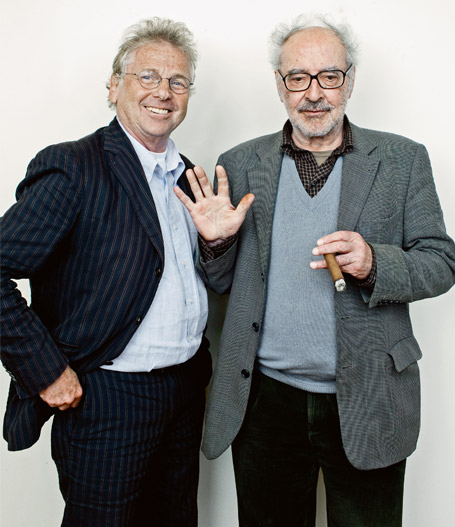
A long conversation with Daniel Cohn-Bendit appeared in Telerama on May 13th here [in French].  [Apr 2018: PDF just in case this long-maintained 🙂 link dies:  Jean-Luc Godard à Daniel Cohn-Bendit : “Qu_est-ce qui t_intéresse dans mon film ?” – Cinéma – Télérama.fr But remember; it’s rude not to click!]

An English translation is online at Cinemasparagus [which has other related links too] here.

[With thanks to Zir Shu and Telerama]